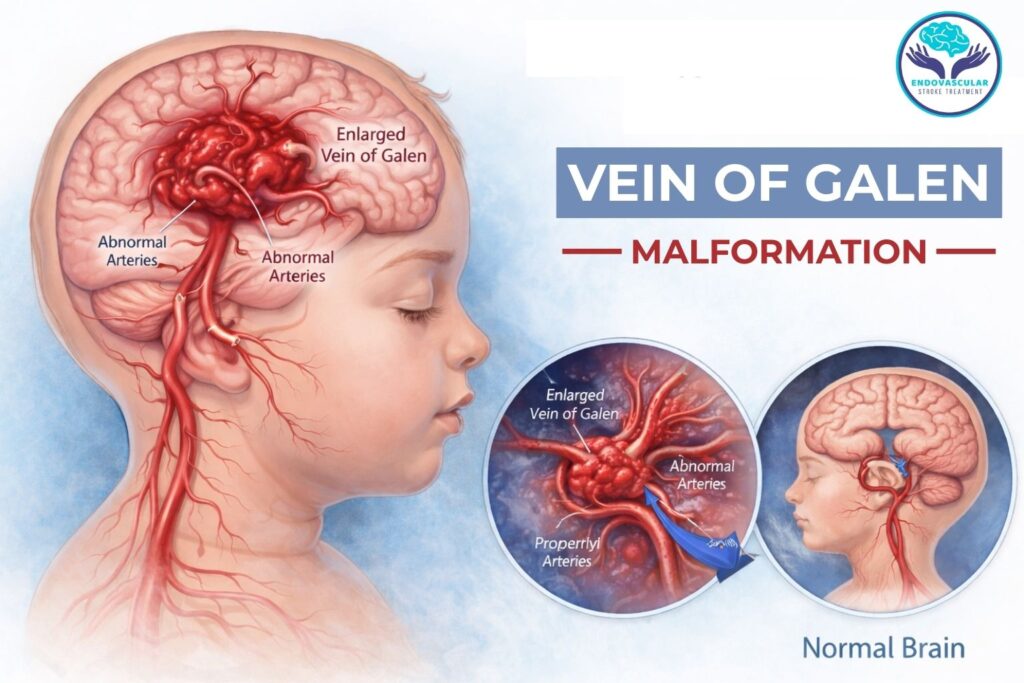
Vein of Galen Malformation (VOGM) is a rare but serious congenital vascular condition of the brain that primarily affects newborns and infants. It occurs when abnormal connections form between brain arteries and veins during fetal development, leading to excessive blood flow into the Vein of Galen.
If not treated early, a Vein of Galen malformation can cause heart failure, brain damage, hydrocephalus, and life‑threatening complications. With advances in endovascular embolisation, outcomes have shown significant improvement.
What Is Vein of Galen Malformation?
The Vein of Galen is a major deep vein that drains blood from the brain. In a Vein of Galen malformation, abnormal arteriovenous connections shunt large volumes of blood directly into this vein.
This abnormal blood flow:
- Overloads the heart
- Raises pressure inside the brain
- Disrupts normal brain development
VOGM develops before birth and is not typically inherited.
Types of Vein of Galen Malformation
1. Choroidal Type
- Multiple abnormal arterial connections
- Present early in newborns
- Often associated with severe heart failure
2. Mural Type
- Fewer arterial connections
- Presents later in infancy or childhood
- Generally has a better prognosis
Causes of Vein of Galen Malformation
VOGM occurs due to abnormal development of blood vessels between the 6th and 11th week of pregnancy. The exact cause is unknown and is usually sporadic, not genetic. It is not caused by maternal actions, medications, or infections.
Symptoms of Vein of Galen Malformation
Symptoms depend on age and severity.
In Newborns
- Severe heart failure
- Rapid breathing
- Poor feeding
- Bluish discoloration of skin (cyanosis)
- Enlarged head size
In Infants and Children
- Enlarging head circumference (hydrocephalus)
- Seizures
- Developmental delay
- Headache or vomiting
- Prominent scalp veins
Diagnosis of Vein of Galen Malformation
Early diagnosis is critical.
- Prenatal ultrasound and fetal MRI may detect VOGM before birth
- Postnatal ultrasound, CT, or MRI of the brain to assess brain structures
- Cerebral angiography to define vascular anatomy and plan treatment
A multidisciplinary team approach is essential for diagnosis and care.
Treatment of Vein of Galen Malformation
Endovascular Embolisation (Gold Standard)
Endovascular embolisation is now the standard of care for Vein of Galen Malformation, and pediatric embolisation allows doctors to safely block abnormal blood vessels in infants and children while preserving normal brain circulation.
- Performed by pediatric neurointerventional specialists
- Catheters are guided through blood vessels
- Doctors use special materials (coils, glue, or liquid embolic agents) to block abnormal connections.
- Often performed in staged sessions to reduce risk
Medical Management
- Stabilization of heart failure in newborns
- Management of hydrocephalus and seizures
Surgery
- Rarely required
- Reserved for complications not controlled by embolisation
Recovery and Long‑Term Outcomes
Outcomes depend on early diagnosis, severity, and timely treatment.
- Many treated children achieve normal or near‑normal development
- Early embolisation reduces heart failure and brain injury
- Long‑term follow‑up is required for neurological development
Advances in neonatal care and endovascular techniques have dramatically improved survival rates.
Conclusion
Vein of Galen Malformation is a rare but potentially life‑threatening condition that requires early diagnosis and expert neurointerventional care. Endovascular embolisation has revolutionized treatment, offering hope for survival and healthy development.
Prompt referral to a specialized stroke center with pediatric neurointerventional expertise is crucial for achieving the best possible outcomes.
Yes. With timely endovascular embolization, many children can be successfully treated.
No. Most cases are sporadic and not inherited.
Yes. Prenatal ultrasound and fetal MRI can diagnose it during pregnancy.
Treatment is often staged, and multiple embolization sessions may be needed.
With modern treatment, survival and developmental outcomes have significantly improved.