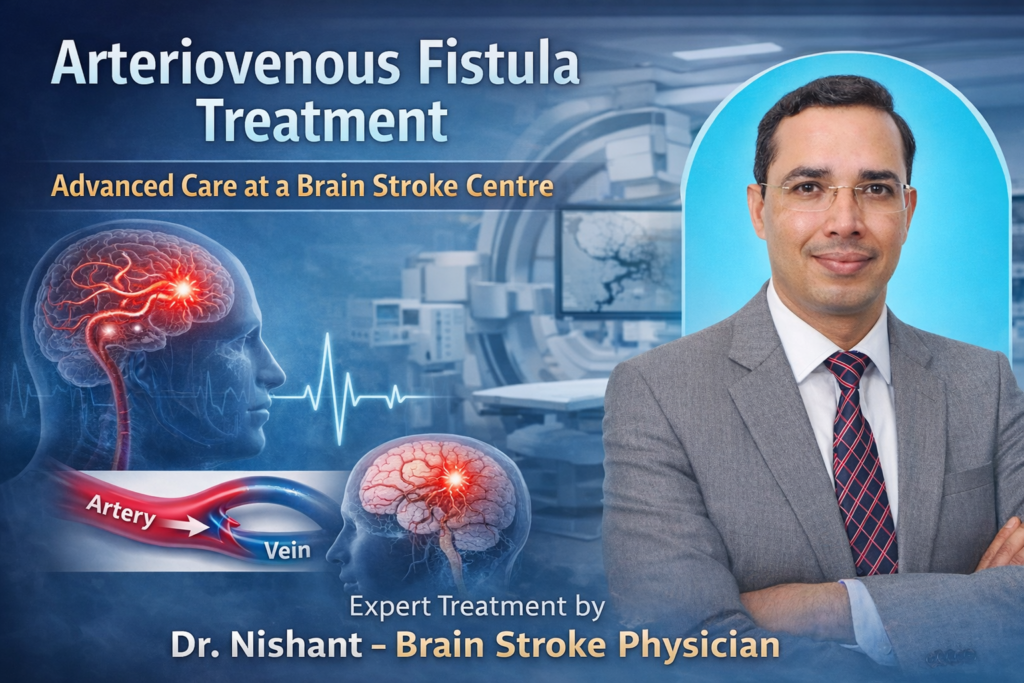
An arteriovenous fistula (AV fistula) is an abnormal connection between an artery and a vein that disrupts the normal circulation of blood. Instead of flowing through capillaries, blood moves directly from an artery to a vein, which can lead to serious complications affecting the brain, heart, and other organs.
In some cases, arteriovenous fistulas in the brain can increase the risk of brain stroke, neurological damage, or hemorrhage. Early diagnosis and treatment at a specialized brain stroke centre is essential to prevent severe complications.
At a dedicated brain stroke centre, experienced specialists such as brain stroke physicians use advanced imaging technologies and minimally invasive procedures to diagnose and treat vascular abnormalities like arteriovenous fistulas effectively. Under the guidance of experts such as Dr. Nishant, patients receive comprehensive care aimed at preventing stroke and improving neurological health.
This article explains the causes, symptoms, diagnosis, and treatment options for arteriovenous fistula and why timely treatment at a specialized stroke centre is crucial.
What Is an Arteriovenous Fistula?
An arteriovenous fistula (AV fistula) occurs when an abnormal connection forms between an artery and a vein. Normally, blood travels from arteries to smaller capillaries before entering veins. However, in an AV fistula, blood bypasses the capillaries and flows directly into a vein.
This abnormal circulation can lead to:
- Increased pressure in veins
- Reduced oxygen supply to surrounding tissues
- Risk of bleeding or vascular rupture
- Increased workload on the heart
When an AV fistula develops in or near the brain, it can significantly increase the risk of brain stroke or hemorrhage, making early treatment essential.
Causes of Arteriovenous Fistula
Arteriovenous fistulas may develop due to several factors.
- Congenital Causes : Some people are born with abnormal blood vessel connections that develop into AV fistulas over time
- Injury or Trauma : Penetrating injuries or surgical procedures can sometimes cause abnormal connections between arteries and veins.
- Vascular Disorders : Certain vascular conditions may lead to the formation of abnormal connections between blood vessels.
- Medical Procedures : Occasionally, catheter-based medical procedures may lead to the development of an AV fistula.When such vascular abnormalities affect the brain, prompt evaluation at a brain stroke centre becomes extremely important.
Symptoms of Arteriovenous Fistula
Symptoms vary depending on the location and size of the fistula.
Common Symptoms
- Swelling near the affected area
- Visible enlarged veins
- Pulsating sensation under the skin
- Fatigue or weakness
Symptoms Related to Brain AV Fistula
When the condition affects the brain, patients may experience:
- Severe headaches
- Vision disturbances
- Seizures
- Difficulty speaking
- Weakness or numbness in the limbs
- Sudden neurological symptoms indicating brain stroke
These symptoms require immediate evaluation by a brain stroke physician at a specialized stroke centre.
How Arteriovenous Fistula Can Lead to Stroke
When an AV fistula occurs in the brain, it can disrupt normal blood circulation and increase pressure within the blood vessels. This may result in:
- Reduced oxygen supply to brain tissues
- Formation of blood clots
- Rupture of blood vessels causing brain hemorrhage
Diagnosis of Arteriovenous Fistula
Accurate diagnosis is essential to determine the location and severity of the condition.
Specialists at an advanced stroke centre use modern imaging technologies such as:
- MRI (Magnetic Resonance Imaging) : Helps visualize brain structures and detect abnormal blood flow.
- CT Scan : Identifies bleeding or structural abnormalities in the brain.
- Cerebral Angiography : Provides detailed images of blood vessels and helps doctors locate the fistula precisely.
- Doppler Ultrasound : Used to evaluate blood flow in blood vessels.A skilled brain stroke physician, such as Dr. Nishant, carefully analyzes these results to create a personalized treatment plan.
Treatment Options for Arteriovenous Fistula
Treatment depends on the size, location, and severity of the fistula.
1. Endovascular Embolization
This minimally invasive procedure involves inserting a catheter through a blood vessel to block the abnormal connection.
2. Surgical Repair
In some cases, surgery may be required to disconnect the abnormal artery-vein connection.
3. Radiosurgery
Focused radiation is used to gradually close the abnormal blood vessels in the brain.
4. Stroke Prevention Therapy
Medications and monitoring may be used to reduce the risk of stroke.
At a modern brain stroke centre, specialists combine advanced technology with expert medical care to provide the most effective treatment.
Importance of Early Treatment at a Stroke Centre
Timely treatment plays a critical role in preventing complications.
Seeking care at a specialized stroke centre offers several advantages:
- Access to experienced brain stroke physicians
- Advanced imaging and diagnostic technology
- Minimally invasive treatment options
- Comprehensive stroke prevention programs
- Continuous neurological monitoring
Under expert supervision from specialists such as Dr. Nishant, patients receive targeted treatment designed to prevent stroke and improve recovery outcomes.
Why Choose a Dedicated Brain Stroke Centre?
A dedicated brain stroke centre focuses specifically on diagnosing and treating neurological vascular disorders.
Benefits include:
- Specialized stroke management protocols
- Multidisciplinary neurological care
- Rapid emergency response for stroke symptoms
- Personalized rehabilitation programs
These centers are designed to provide faster diagnosis, effective treatment, and better recovery outcomes for patients with vascular conditions like arteriovenous fistulas.
When to Consult a Brain Stroke Physician
You should seek immediate medical attention if you experience:
- Sudden severe headache
- Difficulty speaking or understanding speech
- Weakness on one side of the body
- Vision problems
- Loss of balance or coordination
These may be warning signs of a brain stroke and require urgent evaluation by a brain stroke physician.
Early diagnosis and treatment significantly improve the chances of recovery.
Conclusion
An arteriovenous fistula is a serious vascular condition that can disrupt normal blood circulation and increase the risk of brain stroke if left untreated. Recognizing symptoms early and seeking care from a specialized stroke centre is crucial for effective treatment and prevention of complications.
Advanced diagnostic tools and minimally invasive treatments available at a modern brain stroke centre allow specialists to manage vascular abnormalities safely and effectively.
Under the guidance of experienced brain stroke physician like Dr. Nishant, patients can receive comprehensive care aimed at protecting brain health and preventing life-threatening stroke events.
If you or a loved one experiences symptoms suggestive of a stroke or vascular abnormality, do not delay seeking expert medical care. Early intervention can save lives and prevent permanent neurological damage.