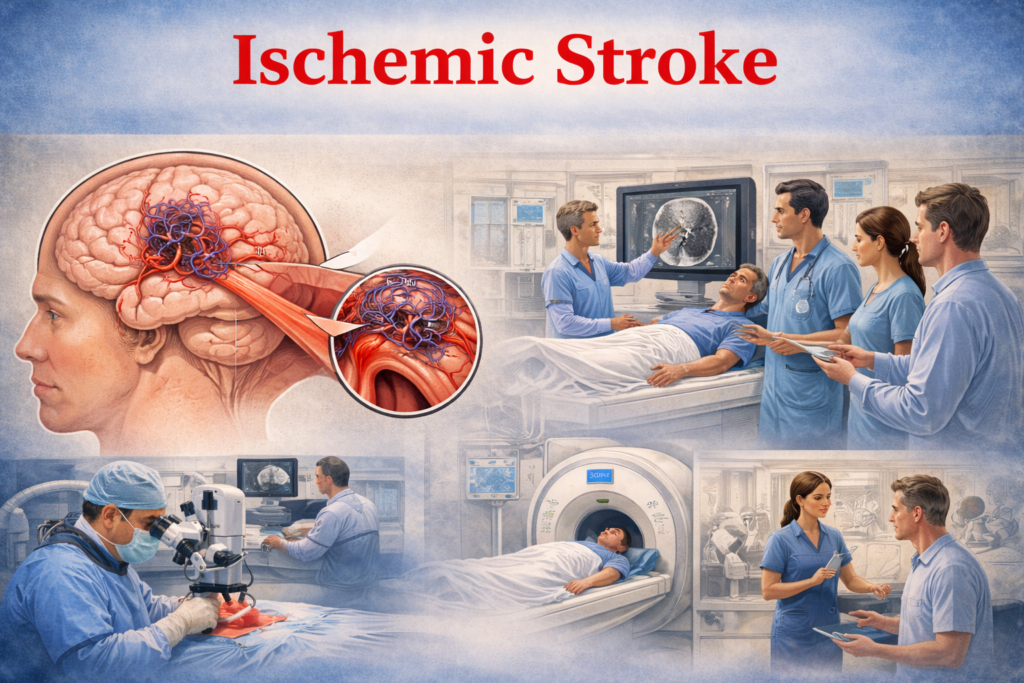
An ischemic stroke is the most common form of stroke, occurring when a blockage in a blood vessel cuts off blood flow to part of the brain. Without a continuous supply of oxygen and nutrients, brain cells begin to die within minutes, making it a time-critical medical emergency.
Immediate treatment at a specialized stroke centre is essential to limit brain damage, reduce complications, and improve survival outcomes. Under the care of an experienced stroke specialist, patients can receive rapid diagnosis and access to advanced therapies that significantly enhance recovery potential.
What Is an Ischemic Stroke?
An ischemic stroke happens when a blood clot blocks or narrows an artery supplying blood to the brain.
How It Occurs
- A clot forms or travels to the brain
- Blood supply is reduced or stopped
- Brain cells begin to die within minutes
This makes ischemic stroke a medical emergency requiring urgent care.
Types of Ischemic Stroke
1. Thrombotic Stroke – Caused by a clot forming in a brain artery. Often linked to plaque buildup (atherosclerosis)
2. Embolic Stroke – Caused by a clot that travels from another part of the body (usually the heart)
Causes of Ischemic Stroke
Medical Causes
- High blood pressure
- Diabetes
- High cholesterol
- Heart diseases (e.g., atrial fibrillation)
Lifestyle Factors
- Smoking
- Obesity
- Lack of exercise
- Unhealthy diet
Symptoms of Ischemic Stroke
Recognizing symptoms early can save lives.
FAST Warning Signs
- F – Face drooping
- A – Arm weakness
- S – Speech difficulty
- T – Time to seek emergency care
Additional Symptoms
- Sudden confusion
- Vision problems
- Difficulty walking
- Loss of balance
- Severe headache
If you notice these symptoms, seek immediate help at a brain stroke centre.
Complications of Ischemic Stroke
If not treated promptly, ischemic stroke can lead to:
- Permanent brain damage
- Paralysis or weakness
- Speech and memory problems
- Disability
- Increased risk of recurrent stroke
Diagnosis at a Stroke Centre
Accurate and rapid diagnosis is critical.
Advanced Diagnostic Tests
- CT Scan – Detects brain abnormalities
- MRI – Identifies affected brain areas
- Blood Tests – Check underlying conditions
- ECG – Evaluates heart rhythm
Treatment Options for Ischemic Stroke
Treatment depends on how quickly the patient reaches a stroke centre.
1. Clot-Dissolving Medication
- Alteplase (tPA) helps dissolve the clot
- Most effective when given within a few hours
2. Mechanical Thrombectomy
- Minimally invasive procedure to remove the clot
- Recommended in severe cases
3. Medications for Long-Term Care
- Blood thinners
- Cholesterol-lowering drugs
- Blood pressure control medications
Importance of Early Treatment at a Brain Stroke Centre
Receiving care at a specialized brain stroke centre offers:
- Faster emergency response
- Advanced imaging technology
- Access to life-saving procedures
- Expert care from a brain stroke physician
- Better recovery outcomes
Prevention of Ischemic Stroke
Healthy Lifestyle Changes
- Maintain a balanced diet
- Exercise regularly
- Control blood pressure and sugar levels
- Quit smoking and limit alcohol
Medical Prevention
- Regular health check-ups
- Taking prescribed medications
- Monitoring heart health
When to Seek Immediate Medical Help
Visit a brain stroke centre immediately if you experience:
- Sudden weakness or numbness
- Difficulty speaking
- Vision disturbances
- Severe dizziness or headache
Early intervention can significantly reduce brain damage and save lives.
Conclusion
An ischemic stroke is a life-threatening condition that requires immediate medical attention. Early diagnosis and treatment at a specialized stroke centre or brain stroke centre can significantly improve recovery and reduce complications. With the expertise of a qualified brain stroke physician, patients receive advanced care, timely intervention, and long-term management to prevent future strokes.
If you or someone around you shows symptoms, do not delay—seek emergency care immediately and protect brain health.