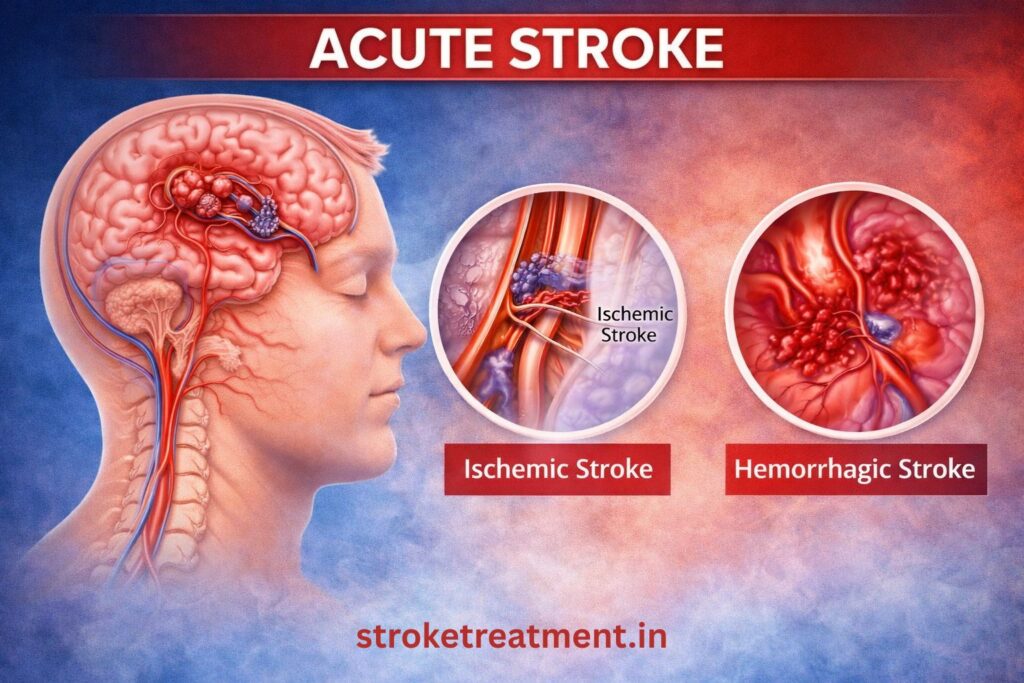
An acute stroke is a sudden medical emergency that occurs when blood flow to the brain is either blocked or disrupted, leading to rapid loss of brain function. Within minutes, brain cells begin to die due to a lack of oxygen, making immediate recognition and treatment critical to survival.
Urgent care at a specialised stroke centre is essential to restore blood flow, limit brain damage, and prevent long-term disability. With rapid diagnosis and advanced treatments such as clot-dissolving therapy or mechanical thrombectomy, patients have significantly better chances of recovery when treated without delay
What Is an Acute Stroke?
An acute stroke occurs when there is a sudden disruption in blood flow to the brain. This interruption prevents oxygen and nutrients from reaching brain cells, causing them to deteriorate rapidly.
Types of Acute Stroke
1. Ischemic Stroke
- Caused by a blockage in a blood vessel supplying the brain
- Accounts for nearly 85% of all stroke cases
- Often results from blood clots or narrowed arteries
2. Hemorrhagic Stroke
- Caused by the rupture of a blood vessel in the brain
- Leads to bleeding and increased pressure inside the skull
- Can be more severe and life-threatening
Causes of Acute Stroke
Medical Conditions
- High blood pressure (hypertension)
- Diabetes
- High cholesterol levels
- Heart diseases (such as atrial fibrillation)
- Previous stroke or transient ischemic attack (TIA)
Lifestyle Risk Factors
- Smoking and tobacco use
- Obesity and poor diet
- Lack of physical activity
- Excessive alcohol consumption
- Chronic stress
Symptoms of Acute Stroke
Recognising symptoms early can save lives and reduce brain damage.
FAST Warning Signs
- F – Face drooping
- A – Arm weakness
- S – Speech difficulty
- T – Time to seek emergency care immediately
Additional Symptoms
- Sudden confusion or difficulty understanding
- Vision problems in one or both eyes
- Severe headache (especially in hemorrhagic stroke)
- Dizziness or loss of balance
- Difficulty walking or coordination problems
Why Acute Stroke Is a Medical Emergency
Acute stroke is extremely time-sensitive:
- Brain cells begin to die within minutes
- Delayed treatment increases the risk of permanent disability
- Can lead to paralysis, speech loss, or cognitive impairment
- Higher risk of death without immediate intervention
Diagnosis at a Brain Stroke Centre
Rapid diagnosis is essential to determine the type of stroke and begin appropriate treatment.
Advanced Diagnostic Methods
- CT Scan – Differentiates between ischemic and hemorrhagic stroke
- MRI Scan – Provides detailed brain imaging
- Blood Tests – Identify underlying conditions
- ECG & Heart Monitoring – Detect heart-related causes
A skilled brain stroke physician quickly evaluates these tests to initiate life-saving treatment.
Emergency Treatment for Acute Stroke
Treatment depends on the type and severity of the stroke.
1. Clot-Busting Medications (Ischemic Stroke)
- Medications such as Alteplase (tPA) dissolve blood clots
- Most effective when given within the first few hours
2. Mechanical Thrombectomy
- Minimally invasive procedure to remove clots from arteries
- Highly effective in severe ischemic strokes
3. Treatment for Hemorrhagic Stroke
- Blood pressure control
- Medications to reduce bleeding
- Surgical intervention if required
- Intensive monitoring in critical care units
Importance of Treatment at a Stroke Centre
Receiving care at a specialised stroke centre or brain stroke centre offers:
- 24/7 emergency stroke response
- Rapid imaging and diagnosis
- Access to advanced life-saving procedures
- Multidisciplinary team approach
- Expert care from experienced brain stroke physicians
- Improved survival and recovery rates
Recovery and Rehabilitation
Recovery after an acute stroke varies depending on the severity and timing of stroke treatment.
Rehabilitation Programs Include
- Physiotherapy – Restores movement and strength
- Speech Therapy – Improves communication skills
- Occupational Therapy – Helps regain daily activities
- Psychological Support – Addresses emotional and mental health
Prevention of Acute Stroke
Lifestyle Modifications
- Maintain healthy blood pressure
- Control diabetes and cholesterol
- Follow a balanced diet
- Exercise regularly
- Quit smoking and limit alcohol
Medical Care
- Regular health check-ups
- Take prescribed medications
- Monitor heart health
When to Seek Emergency Help
Visit a brain stroke centre immediately if you experience:
- Sudden weakness or numbness
- Difficulty speaking or understanding
- Vision disturbances
- Severe headache
- Loss of balance or coordination
Early treatment can save both life and brain function.
Conclusion
An acute stroke is a critical medical emergency that requires immediate attention. Early diagnosis and advanced treatment at a specialised stroke centre or brain stroke centre can significantly improve survival and recovery outcomes. Under the guidance of an experienced brain stroke physician, patients receive timely intervention, advanced care, and long-term management to prevent future strokes and protect brain health.
If you or someone around you shows symptoms of a stroke, act FAST and seek emergency medical care immediately—every second counts.
FAQs
1. What are the early warning signs of an acute stroke?
Common early signs include sudden weakness or numbness on one side of the body, difficulty speaking or understanding speech, sudden confusion, vision problems, dizziness, loss of balance, or a severe headache with no known cause. The FAST method (Face drooping, Arm weakness, Speech difficulty, Time to act) is often used to quickly recognise a stroke.
2. How is an acute stroke treated in the emergency phase?
Treatment depends on the type of stroke. For ischemic strokes, clot-busting medications (thrombolytics) or mechanical clot removal may be used if given quickly. For hemorrhagic strokes, treatment focuses on controlling bleeding and reducing pressure in the brain. In both cases, rapid hospital care significantly improves outcomes and reduces long-term disability.
3. What complications can occur after an acute stroke?
Complications may include difficulty speaking, paralysis, memory problems, swallowing difficulties, and emotional changes such as depression. The severity depends on the part of the brain affected and how quickly treatment was given.
4. Can an acute stroke be prevented?
Many strokes can be prevented by managing risk factors. This includes maintaining a healthy diet, exercising regularly, controlling blood pressure and blood sugar, quitting smoking, limiting alcohol intake, and following medical advice for existing conditions.