Embolisation: A Breakthrough in Treating Brain Vascular Disorders
Embolisation in Neurovascular Care
Embolisation is one of the most advanced and minimally invasive procedures in modern neurovascular medicine. It is a catheter-based technique used to block abnormal or bleeding blood vessels in the brain, helping to prevent life-threatening complications such as hemorrhage and stroke.
This procedure plays a critical role in the management of conditions like arteriovenous malformations (AVMs), aneurysms, and certain types of tumors. With rapid advancements, embolisation has become a key treatment option at a specialized stroke centre or brain stroke centre, performed by an experienced brain stroke physician.
What Happens in Brain Vascular Disorders?
Many serious brain conditions occur due to abnormal blood vessels or bleeding within the brain.
- In AVMs, arteries and veins are abnormally connected
- In aneurysms, blood vessels weaken and may rupture
- In hemorrhagic stroke, bleeding damages brain tissue
These conditions can disrupt normal blood flow, increase pressure inside the skull, and lead to severe neurological damage.
Without timely intervention, the risk of Brain Stroke, brain hemorrhage, or death increases significantly.
What Is Embolisation?
Embolisation is a minimally invasive procedure used to block abnormal blood vessels or control bleeding in the brain.
How the Procedure Works
- A thin catheter is inserted through an artery in the groin or wrist
- It is guided to the affected brain vessel using advanced imaging
- Special materials (coils, glue, or particles) are injected
- Blood flow to the abnormal area is blocked
This reduces the risk of bleeding and stabilizes the condition.
Types of Embolisation
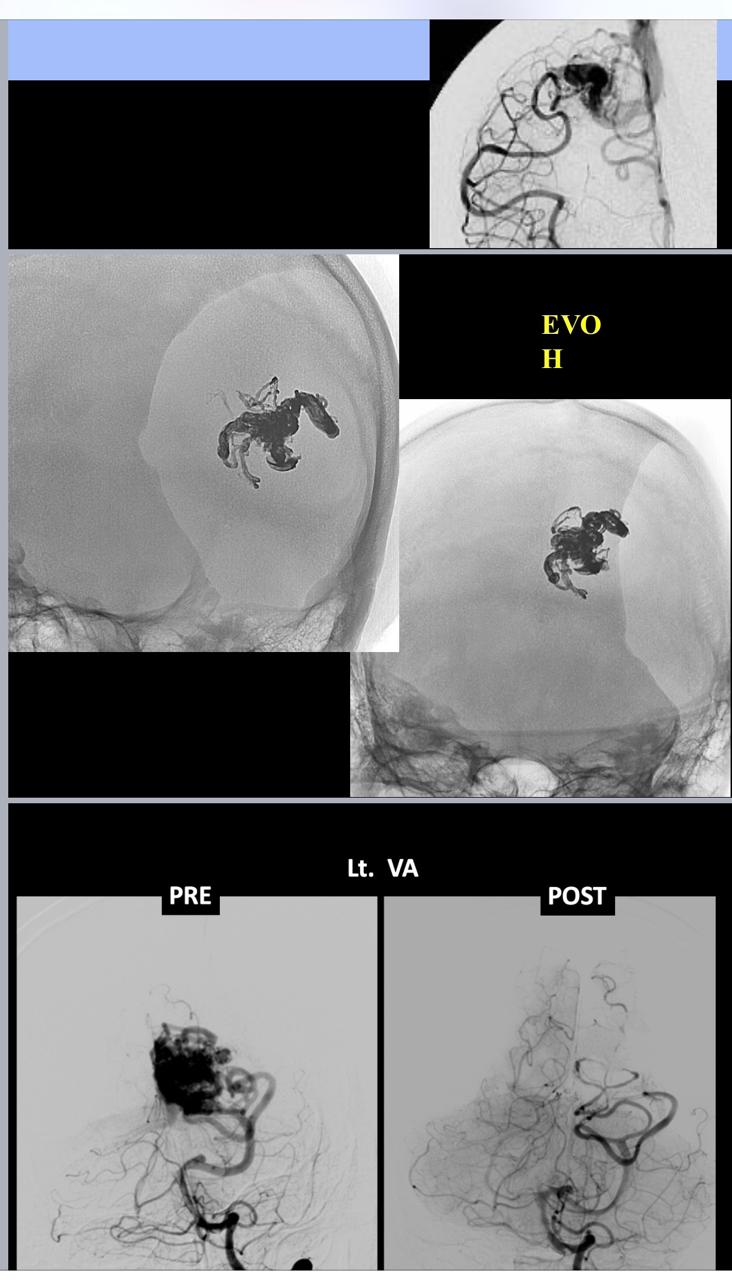
1. AVM Embolisation
- Used to reduce or eliminate abnormal blood vessel tangles
- Often performed before surgery or radiosurgery
2. Aneurysm Embolisation (Coiling)
- Small coils are placed inside the aneurysm
- Prevents rupture and bleeding
3. Tumor Embolisation
- Blocks blood supply to tumors
- Reduces bleeding during surgery
The Scientific Advancement
Over the past few decades, embolisation techniques have evolved significantly with the introduction of:
- Advanced microcatheters
- Liquid embolic agents (Onyx, glue)
- High-resolution imaging guidance
These innovations have improved precision, safety, and patient outcomes.
Clinical studies have shown that embolisation significantly reduces bleeding risk and improves surgical success in complex neurovascular conditions.
Who Is Eligible for Embolisation?
Patients with:
- Arteriovenous malformations (AVMs)
- Brain aneurysms
- Vascular tumors
- Active brain bleeding
- High risk of hemorrhagic stroke
A detailed evaluation at a brain stroke centre helps determine eligibility.
Importance of Early Treatment
Timely embolisation is crucial because:
- It prevents rupture of abnormal vessels
- Reduces risk of brain hemorrhage
- Stabilizes critical conditions
- Improves long-term neurological outcomes
Early intervention at a stroke centre can be life-saving.
Safety and Outcomes
Modern embolisation procedures are highly effective:
- High success rates in blocking abnormal vessels
- Minimally invasive with faster recovery
- Reduced risk compared to open surgery
- Lower complication rates in experienced centers
Performed by an expert brain stroke physician, embolisation offers excellent clinical outcomes.
Global Impact and Advancements
Embolisation has transformed the treatment of brain vascular disorders worldwide. It is now considered a standard of care in leading brain stroke centres.
Ongoing advancements include:
- Image-guided precision techniques
- Improved embolic materials
- Combination therapies with surgery and radiosurgery
- Enhanced patient selection using advanced imaging
The Future of Embolisation
Research continues to improve embolisation outcomes through:
- AI-assisted imaging and planning
- Safer and more effective embolic agents
- Minimally invasive robotic-assisted procedures
- Personalized treatment strategies
These developments are making embolisation safer, faster, and more effective.
Key Takeaway
Embolisation is a scientifically advanced, minimally invasive, and life-saving treatment for various brain vascular conditions. It plays a crucial role in preventing bleeding, managing AVMs and aneurysms, and reducing the risk of brain stroke.
When performed at a specialized stroke centre or brain stroke centre by an experienced brain stroke physician, embolisation significantly improves patient outcomes and quality of life.
If symptoms of a brain vascular condition or stroke appear, seek immediate medical care—early intervention can make all the difference between recovery and long-term disability.
- 022-61305089
- drnishant@stroketreatment.in
- nishantaditya@yahoo.com