Paralysis is one of the most devastating consequences of a stroke and most commonly occurs when blood supply to a part of the brain is suddenly blocked by a blood clot. This interruption deprives brain cells of oxygen and nutrients, leading to rapid neurological dysfunction such as weakness, loss of movement, speech difficulty, or paralysis affecting one side of the body. In such emergencies, mechanical thrombolysis offers a powerful, life-saving treatment that can restore blood flow and significantly improve recovery
What Is Mechanical Thrombolysis?
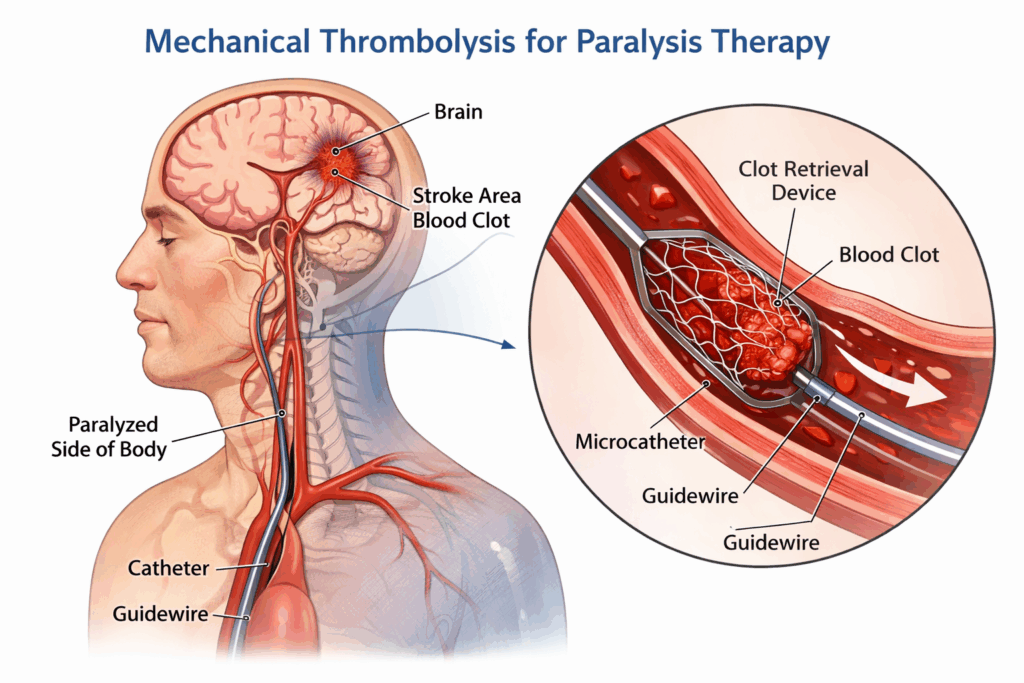
Mechanical thrombolysis, also known as mechanical thrombectomy, is a minimally invasive, non-surgical procedure performed by trained interventional neuroradiologists or neurointerventionists. The goal of this therapy is to physically remove the blood clot blocking a major artery supplying the brain.
Using advanced imaging guidance, a thin catheter is inserted through a blood vessel—usually from the groin or wrist—and navigated to the blocked brain artery. Specialized devices are then used to suction out or retrieve the clot, restoring normal blood flow to the affected area of the brain. By re-establishing circulation, mechanical thrombolysis helps prevent permanent brain damage and improves neurological outcomes after ischemic stroke.
The Critical Time Window
Time is the most important factor in stroke treatment. For optimal results, patients must reach a specialized stroke center as early as possible—ideally within 6 to 8 hours from the onset of symptoms, and in selected cases even later based on imaging.
Early intervention significantly increases the chances of:
- Rapid restoration of the brain blood supply
- Reduction in the severity of paralysis
- Improved neurological recovery
- Greater independence after stroke
The sooner the clot is removed, the more brain tissue can be saved.
Why Early Treatment Is Crucial
The brain is extremely sensitive to oxygen deprivation. Every minute of untreated stroke leads to the loss of millions of brain cells. Mechanical thrombolysis works by:
- Quickly removing the obstructing clot
- Minimizing irreversible brain injury
- Improving recovery of motor function
- Reducing long-term disability
This treatment has revolutionized modern stroke care and offers hope even in severe cases of paralysis.
Conclusion
Mechanical thrombolysis is a cornerstone therapy for stroke-related paralysis caused by blood clots. Sudden symptoms such as weakness on one side of the body, facial drooping, difficulty speaking, or loss of balance should always be treated as a medical emergency. Immediate transfer to a center equipped with advanced neurointerventional facilities can save lives, preserve brain function, and restore mobility. Early recognition and rapid treatment remain the key to successful stroke recovery. For more details, contact Stroketreatment