As a neurologist, few moments are as dramatic and rewarding as witnessing a patient regain movement or speech after a successful thrombectomy. This advanced, minimally invasive stroke treatment has revolutionized the management of acute ischemic stroke, offering hope where permanent disability or death once seemed inevitable.
In this blog, you will find out what thrombectomy is, who needs it, how it works, and why early stroke treatment is critical—while addressing common patient concerns.
What Is Thrombectomy?
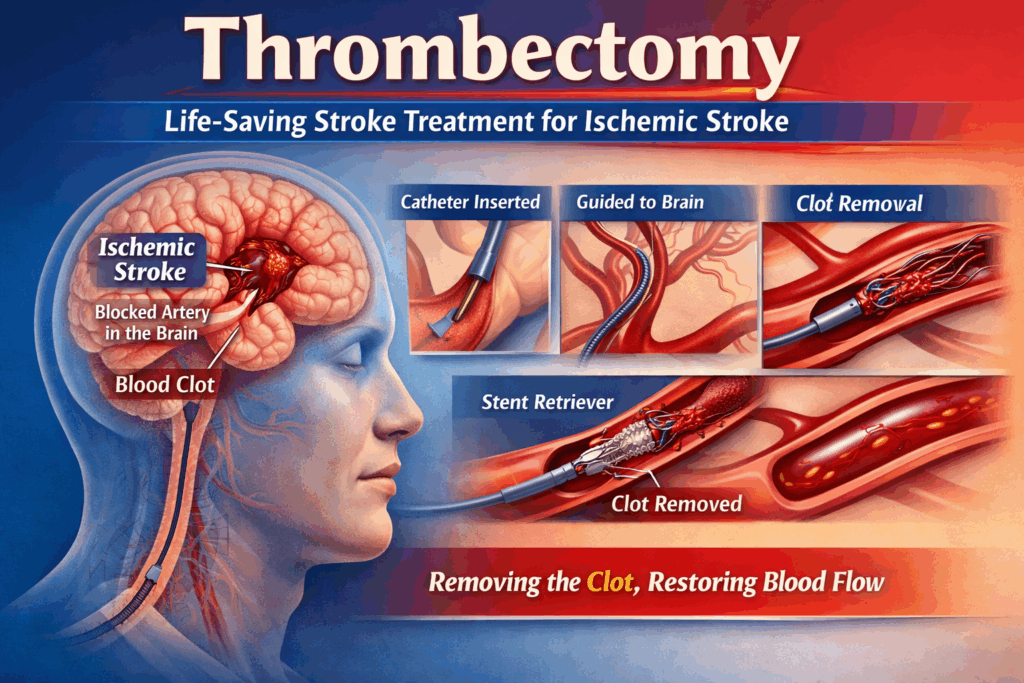
Mechanical thrombectomy is an advanced stroke treatment used to remove a blood clot (thrombus) from a blocked artery in the brain. It is primarily performed in patients with large vessel occlusion (LVO) stroke, a severe and potentially devastating form of ischemic stroke.
Unlike clot-busting medications alone, thrombectomy physically removes the clot, allowing rapid restoration of blood flow and preventing further brain damage.
Why Is Thrombectomy Important in Stroke Treatment?
An ischemic stroke occurs when blood flow to part of the brain is blocked, depriving brain tissue of oxygen and nutrients. Every minute without effective stroke treatment results in the loss of millions of neurons—hence the well-known phrase:
Clinical evidence shows that thrombectomy:
- Significantly reduces long-term disability
- Improves survival rates
- Restores independence in many stroke patients
For eligible patients with large vessel ischemic stroke, thrombectomy is now considered the gold standard stroke treatment.
Who Is Eligible for Thrombectomy?
Not all stroke patients qualify for this advanced stroke treatment. Ideal candidates usually include:
- Patients with acute ischemic stroke
- Imaging evidence of a large artery blockage (e.g., middle cerebral artery or internal carotid artery)
- Symptom onset within 6 hours, and in selected cases up to 24 hours
- Brain imaging showing salvageable brain tissue
Advanced imaging, such as CT angiography and perfusion MRI, plays a critical role in selecting patients who will benefit most from thrombectomy.
How Is a Thrombectomy Performed?
Thrombectomy is performed by a neurointerventional specialist in a specialized catheterization laboratory.
A thin catheter is inserted through an artery in the groin or wrist and carefully guided to the blocked vessel in the brain. A stent retriever or suction device is then used to remove the clot and restore blood flow.
Most thrombectomy procedures take 30 to 90 minutes, depending on the complexity of the blockage.
Thrombectomy vs Thrombolysis (tPA)
Both thrombolysis and thrombectomy are essential components of modern stroke treatment, but they work differently.
Thrombolysis (tPA)
- An intravenous medication that dissolves blood clots
- Must be given within 4.5 hours of symptom onset
- Most effective for small to medium clots
Mechanical Thrombectomy
- Physically removes the clot
- Highly effective for large vessel occlusion strokes
- Can be performed up to 6 hours, and in selected cases up to 24 hours
Many comprehensive stroke centers use bridging therapy, where patients receive tPA first, followed by thrombectomy, to maximize recovery.
Benefits of Mechanical Thrombectomy
Mechanical thrombectomy offers major advantages as a stroke treatment, including:
- Rapid restoration of cerebral blood flow
- Reduced extent of brain injury
- Lower risk of permanent disability
- Improved functional recovery
- Greater likelihood of returning to independent living
Clinical trials consistently show that patients treated with thrombectomy have significantly better outcomes compared to medical therapy alone.
Risks and Complications
When performed in experienced stroke centers, thrombectomy is generally safe. However, potential risks include:
- Bleeding in the brain
- Blood vessel injury
- Contrast-related reactions
Careful patient selection and expert technique ensure that, for most eligible patients, the benefits of stroke treatment with thrombectomy far outweigh the risks.
Recovery After Thrombectomy
Recovery following this stroke treatment depends on several factors, including:
- Speed of intervention
- Size and location of the stroke
- Patient’s age and overall health
Early and intensive stroke rehabilitation—physiotherapy, speech therapy, and occupational therapy—is essential for optimal recovery and long-term independence.
When to Seek Emergency Stroke Treatment
Early recognition of stroke symptoms saves lives. Remember the FAST warning signs:
- Face drooping
- Arm weakness
- Speech difficulty
- Time to call emergency services
Immediate transfer to a comprehensive stroke treatment center can be life-saving.
Conclusion
Thrombectomy has transformed modern stroke treatment. As a neurologist, I have seen how timely mechanical thrombectomy can convert devastating strokes into survivable—and even recoverable—events.
Raising public awareness, ensuring rapid diagnosis, and improving access to specialized stroke centers are essential so that more patients can benefit from this life-saving stroke treatment