
Flow Diversion: Advanced Treatment for Brain Aneurysms
Advanced Endovascular Treatment for Complex Intracranial Aneurysms
Flow diversion is an advanced minimally invasive procedure used to treat certain types of brain aneurysms that are difficult to manage with conventional techniques such as surgical clipping or coil embolization. This modern endovascular treatment uses a specialized device called a flow diverter stent to redirect blood flow away from the aneurysm, allowing the affected blood vessel to heal over time. Procedures like flow diversion are typically performed in specialized neurovascular facilities such as a brain stroke centre, where advanced imaging technology and experienced specialists work together to manage complex cerebrovascular conditions.
Unlike traditional treatments that fill the aneurysm sac directly, flow diversion reconstructs the parent artery and gradually seals off the aneurysm from circulation. This approach has significantly improved the treatment of large, wide-necked, and complex intracranial aneurysms.
When performed by experienced neurointerventional specialists, flow diversion provides a safe and effective option that can reduce the risk of aneurysm rupture and improve long-term outcomes.
What Is Flow Diversion?
Flow diversion is an endovascular procedure designed to treat brain aneurysms by altering the way blood flows through the affected artery.
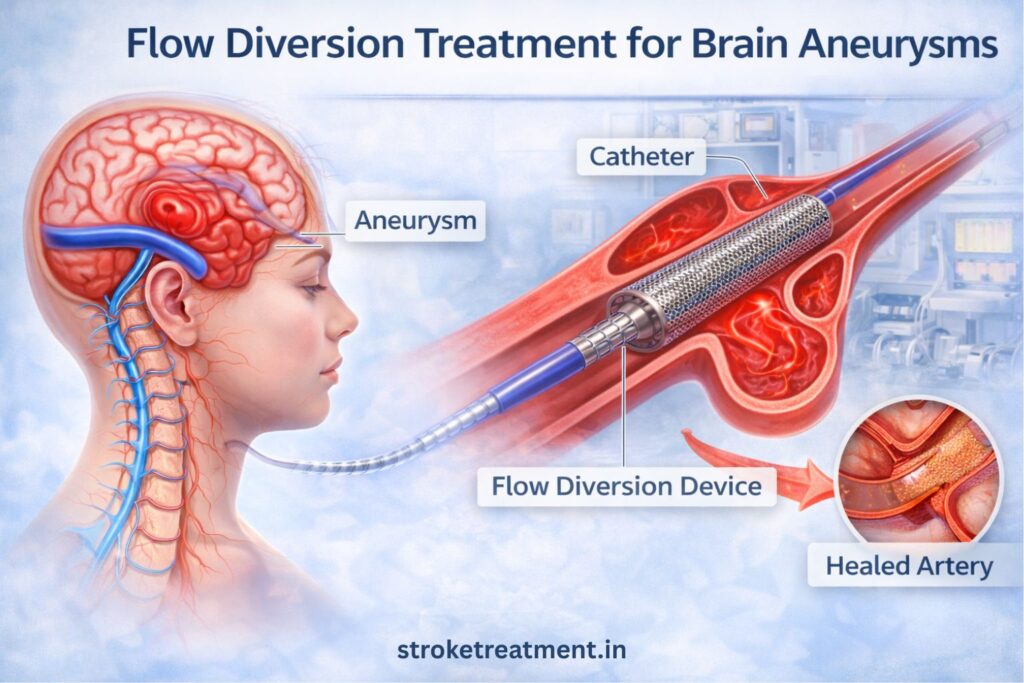
During the procedure, a thin, flexible stent with a tightly braided mesh design is placed inside the artery across the neck of the aneurysm. This device acts as a scaffold that redirects blood flow along the normal pathway of the vessel while reducing the amount of blood entering the aneurysm.
Over time, this reduced blood flow causes the aneurysm to clot and shrink gradually. At the same time, new cells grow along the stent’s surface, creating a new lining for the artery and permanently sealing off the aneurysm.
Because this technique repairs the diseased blood vessel itself, flow diversion has become an important treatment option for aneurysms that cannot be easily treated with coils or surgery.
Who May Need Flow Diversion?
Flow diversion is typically recommended for patients with complex intracranial aneurysms, especially those that are difficult to treat using conventional techniques.
Your doctor may consider flow diversion if you have:
Large intracranial aneurysms
Giant aneurysms
Wide-neck aneurysms
Fusiform aneurysms (involving the entire vessel wall)
Dissecting aneurysms
Recurrent aneurysms after previous coiling
Aneurysms located in major brain arteries
The decision to perform flow diversion is based on several factors, including the size, location, and shape of the aneurysm, as well as the patient’s overall health. Specialized imaging tests are used to evaluate the aneurysm and determine whether this procedure is the most appropriate treatment option.
How the Flow Diversion Procedure Is Performed
Flow diversion is performed in a specialized neurointerventional catheterization laboratory using minimally invasive endovascular techniques.
1. Anesthesia – The procedure is usually performed under general anesthesia, so the patient remains comfortable and still during the treatment.
2. Accessing the Blood Vessel – A small puncture is made in an artery in the groin or wrist. Through this opening, a thin catheter is inserted into the blood vessel.
3. Navigating to the Aneurysm – Using advanced imaging guidance, the catheter is carefully guided through the vascular system to the artery that contains the aneurysm.
4. Deploying the Flow Diverter – Once positioned correctly, the flow diverter stent is placed across the neck of the aneurysm. The device expands and attaches to the vessel wall, creating a new pathway for blood flow.
5. Redirecting Blood Flow – After deployment, the stent reduces the amount of blood entering the aneurysm. Over time, the aneurysm gradually seals off as the vessel heals.
The entire procedure typically takes one to three hours, depending on the complexity of the aneurysm.
Benefits of Flow Diversion
Flow diversion offers several advantages compared with traditional aneurysm treatments.
Minimally Invasive Approach – The procedure is performed through a small catheter without the need for open brain surgery.
Effective for Complex Aneurysms – Large and wide-neck aneurysms that are difficult to treat with coils can often be successfully treated using flow diversion.
Reconstruction of the Blood Vessel – Instead of simply filling the aneurysm, the device helps rebuild the artery and restore normal blood flow.
High Long-Term Success Rates – Many aneurysms treated with flow diversion gradually close completely over time.
Reduced Risk of Recurrence – Because the parent artery is reconstructed, the risk of aneurysm recurrence may be lower compared with some other treatments.
Risks and Potential Complications
Flow diversion is generally considered safe when performed by experienced specialists. However, as with any neurointerventional procedure, certain risks are possible.
Potential complications may include:
Stroke
Blood clots are forming within the stent
Bleeding in the brain
In-stent thrombosis
Device migration or improper placement
Delayed aneurysm rupture (rare)
These risks are minimized through careful patient selection, advanced imaging evaluation, and proper medication management.
Your medical team will discuss the potential risks and benefits of the procedure before treatment.
Recovery After Flow Diversion
Recovery following flow diversion is usually faster than with open brain surgery.
Hospital Stay
Most patients remain in the hospital for one to two days for monitoring after the procedure.
Medications
Patients typically need dual antiplatelet therapy (such as aspirin and another antiplatelet medication) for several months to prevent clot formation within the stent.
Follow-Up Imaging
Regular follow-up imaging is necessary to confirm that the aneurysm has closed and the stent is functioning properly. These evaluations may include angiography, CT scans, or MRI.
Return to Normal Activities
Many patients can return to routine activities within one to two weeks, depending on their overall health and the complexity of the procedure.
Conclusion
Flow diversion represents a major advancement in the treatment of complex intracranial aneurysms. By redirecting blood flow and reconstructing the affected artery, this minimally invasive technique allows the aneurysm to heal naturally while preserving normal circulation in the brain. Some aneurysms may be better treated with other techniques, such as aneurysm coiling, depending on the size, shape, and location of the aneurysm.
Patients experiencing symptoms related to aneurysms or other cerebrovascular conditions should seek evaluation from an experienced brain stroke physician, who can assess the condition and recommend the most appropriate treatment options based on individual clinical needs.
Is flow diversion a type of brain surgery?
How long does it take for the aneurysm to close?
Is the flow diverter permanent?
Is flow diversion safe?
Will I need medications after the procedure?
- 022-61305089
- drnishant@stroketreatment.in
- nishantaditya@yahoo.com