Stroke Treatment - A Comprehensive Overview
Stroke treatment is a time-sensitive medical emergency that requires immediate diagnosis and expert care. At our specialised stroke centre, we provide rapid evaluation, advanced imaging, and evidence-based stroke treatment designed to reduce brain damage, prevent disability, and improve survival.
Early intervention saves brain function. Immediate treatment saves lives.
Why Immediate Stroke Treatment Matters
During a stroke, brain cells begin to die within minutes due to a lack of oxygen. The longer the treatment is delayed, the higher the risk of permanent paralysis, speech impairment, memory loss, or death.
This is why stroke is often described as “Time Is Brain.”
Rapid diagnosis and specialised stroke care significantly improve recovery outcomes.
What Is a Stroke?
A stroke occurs when the blood supply to the brain is suddenly interrupted or when a blood vessel ruptures inside the brain. Because brain tissue requires a constant oxygen supply, even a short interruption can cause irreversible damage.
There are two main types of stroke, and each requires a completely different treatment approach.
Types of Stroke We Treat
Ischemic Stroke
An ischemic stroke happens when a blood clot blocks an artery supplying blood to the brain. It is the most common type of stroke.
Treatment focuses on restoring blood flow quickly to prevent permanent brain injury.
→ Learn more about Ischemic Stroke
Hemorrhagic Stroke (Brain Hemorrhage)
A hemorrhagic stroke occurs when a blood vessel ruptures, causing bleeding within or around the brain.
Treatment aims to control bleeding, reduce pressure on the brain, and prevent further damage.
→ Learn more about Brain Hemorrhage
Stroke Symptoms That Need Immediate Treatment
Seek emergency medical care immediately if you notice:
Sudden weakness or paralysis of the face, arm, or leg
Difficulty speaking or understanding speech
Sudden vision loss or blurred vision
Severe headache with no known cause
Loss of balance or coordination
Do not wait for symptoms to improve. Early stroke treatment can preserve brain function and prevent disability.
Emergency Stroke Treatment Timeline
Why “Time Is Brain”
Millions of brain cells are lost every minute during a stroke. The faster the treatment begins, the greater the chance of recovery.
Treatment Windows
Certain stroke treatments are effective only within specific time limits. Arriving early allows doctors to use the most advanced and effective options.
Role of Rapid Imaging
Immediate CT or MRI imaging helps determine whether the stroke is caused by a clot or bleeding. This step is critical because treatment strategies differ completely between these two types.
Stroke Treatment Options Available
Stroke treatment is selected based on:
Type of stroke
Severity
Time since symptom onset
Imaging findings
Our stroke centre provides the following advanced treatments:
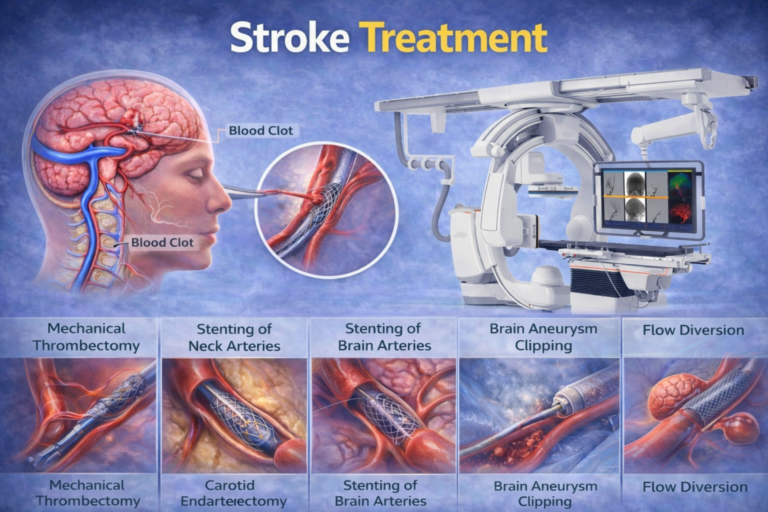
Mechanical Thrombectomy: A minimally invasive procedure used for ischemic stroke caused by large clots. It restores blood flow by removing the blockage from the artery.
Carotid Stenting: Recommended when a stroke is caused by the narrowing of the neck arteries supplying the brain.
Intracranial Stenting: Used when a significant narrowing of brain arteries increases stroke risk.
Medical Management & Stroke Unit Monitoring: Includes specialised stroke unit care, medications, continuous monitoring, and prevention of complications under expert supervision. Treatment decisions are made after thorough imaging and evaluation — avoiding unnecessary procedures.
How Stroke Treatment Is Given
Step 1: Emergency Evaluation
Immediate assessment of neurological symptoms and vital signs upon arrival.
Step 2: Rapid Brain Imaging
CT or MRI scan identifies:
Blocked blood vessel (ischemic stroke)
Brain bleeding (hemorrhagic stroke)
Step 3: Treatment Decision
Based on:
Stroke type
Time since onset
Severity of brain involvement
Step 4: Targeted Treatment
Clot-related strokes: Blood flow is restored
Bleeding strokes: Bleeding is controlled, and pressureis reduced
Continuous monitoring in a stroke unit
Step 5: Post-Stroke Care & Recovery Planning
Early rehabilitation planning and prevention of future strokes begin immediately.
Stroke Recovery & Rehabilitation
Recovery starts soon after emergency treatment and continues over time.
Paralysis Recovery
Focused therapy helps regain strength and coordination in affected limbs.
→ Learn more about Paralysis Treatment
Speech and Mobility Therapy
Speech, swallowing, and walking difficulties are addressed through specialised rehabilitation programs.
Long-Term Rehabilitation
Recovery plans are personalised according to stroke severity and patient needs.
Early rehabilitation significantly improves long-term independence.
Why Choose Our Stroke Centre?
24×7 emergency stroke response
Advanced brain imaging facilities
Experienced stroke and neurovascular specialists
Multidisciplinary stroke care team
Evidence-based, patient-focused treatment
Our goal is not just survival — but meaningful recovery and restored quality of life.
FAQs
What are the first signs of a stroke?
Sudden weakness on one side of the body, facial drooping, difficulty speaking, vision loss, or imbalance are early warning signs requiring immediate treatment.
How soon should stroke treatment begin?
Stroke treatment should begin as early as possible, ideally within the first few hours after symptoms start. Early care prevents permanent brain damage.
What is the most effective treatment for stroke?
The most effective treatment depends on the stroke type and how quickly the patient reaches a stroke centre. Rapid diagnosis allows doctors to select the best option.
Can paralysis improve after a stroke?
Many patients show improvement with early treatment and structured rehabilitation.
What happens if stroke treatment is delayed?
Delayed treatment increases the risk of permanent disability, paralysis, speech problems, or death.
Do all stroke patients need surgery?
No. Many are treated with medications and monitoring. Interventional procedures are required only in selected cases.
How important is rehabilitation after a stroke?
Rehabilitation is critical for regaining strength, speech, and independence. Early therapy improves long-term outcomes.
- 022-61305089
- drnishant@stroketreatment.in
- nishantaditya@yahoo.com