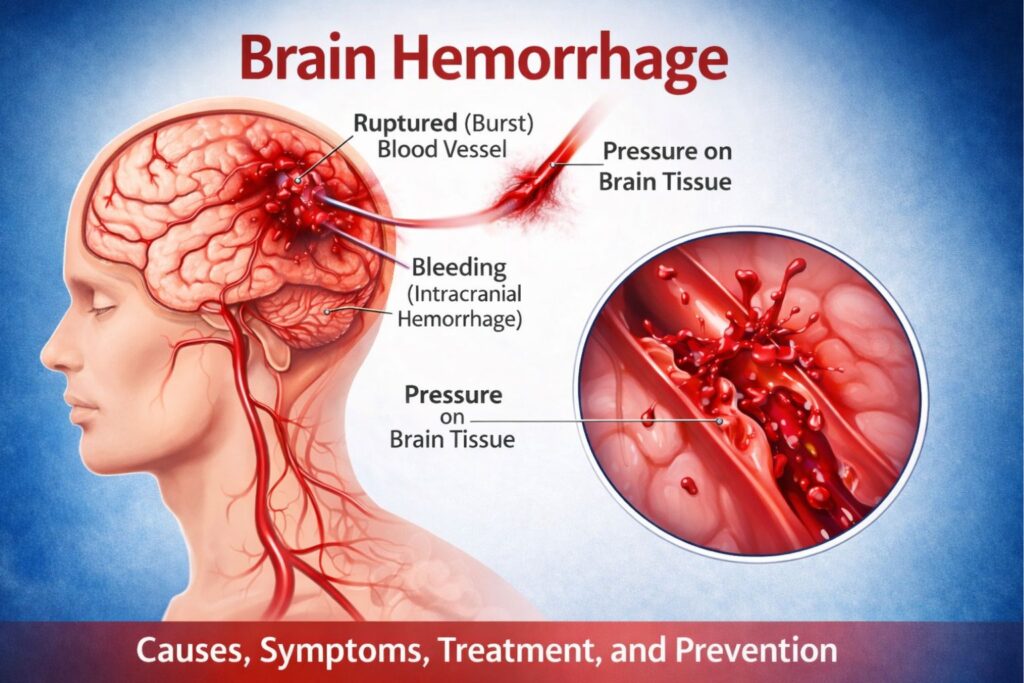
A brain hemorrhage, also known as an intracranial hemorrhage, is a serious and life-threatening condition in which bleeding occurs within or around the brain. This bleeding increases pressure on brain tissue, disrupts normal brain function, and can rapidly lead to stroke, permanent disability, or death if not treated urgently. Early recognition and immediate treatment at a specialized stroke center are critical for survival and recovery.
What Is a Brain Hemorrhage?
A brain hemorrhage occurs when a blood vessel inside the brain ruptures or leaks. The accumulated blood compresses brain tissue and prevents oxygen from reaching affected areas, causing brain cell damage. It is a type of hemorrhagic stroke and accounts for a significant proportion of stroke-related deaths, especially in India, where uncontrolled blood pressure is common.
Types of Brain Hemorrhage
1. Intracerebral Hemorrhage: Bleeding occurs directly within the brain tissue. It is the most common type and is often caused by long-standing high blood pressure.
2. Subarachnoid Hemorrhage (SAH): Bleeding occurs in the space between the brain and the thin membranes covering it. It commonly happens because of a ruptured brain aneurysm.
3. Subdural Hemorrhage: Bleeding occurs between the brain and its outer covering, often due to head injury. It is more common in elderly patients.
4. Epidural Hemorrhage: Bleeding occurs between the skull and the outer brain covering, usually following trauma.
Causes of Brain Hemorrhage
Several conditions can cause or increase the risk, such as:
- Uncontrolled high blood pressure (hypertension)
- Ruptured brain aneurysm
- Arteriovenous malformation (AVM)
- Head injury or trauma
- Blood-thinning medications
- Brain tumors
- Bleeding disorders
- Excessive alcohol use
Symptoms of Brain Hemorrhage
Symptoms usually appear suddenly and may worsen rapidly. Common signs include:
- Sudden severe headache
- Weakness or numbness on one side of the body
- Difficulty speaking or understanding speech
- Loss of balance or coordination
- Vomiting or nausea
- Seizures
- Drowsiness or loss of consciousness
Any sudden neurological symptom must be treated as an emergency.
Diagnosis of Brain Hemorrhage
Rapid diagnosis helps guide life-saving treatment. Investigations include:
- CT scan of the brain – the fastest and most effective test to detect bleeding
- MRI brain – provides detailed imaging once the patient is stable
- CT or MR angiography – identifies aneurysms or AVMs
- Cerebral angiography – detailed blood vessel evaluation when required\
Treatment Options for Brain Hemorrhage
Treatment depends on the cause, size, and location of bleeding, as well as the patient’s condition.
Emergency Medical Management
- Blood pressure control
- Medications to reduce brain swelling
- Seizure prevention
- Reversal of blood thinners if needed
Surgical Treatment
Surgery may be essential to remove the blood clot or relieve pressure on the brain.
Endovascular Treatment
Minimally invasive procedures are used to treat the underlying cause:
- Aneurysm coiling for ruptured aneurysms
- AVM embolization for arteriovenous malformations
Advanced neurointerventional care plays a crucial role in preventing re-bleeding.
Recovery and Rehabilitation
Recovery depends on the severity of bleeding and how quickly treatment is initiated.
Hospital Stay
Patients are often monitored in the intensive care unit. The duration of hospitalization varies from a few days to several weeks.
Rehabilitation
Rehabilitation may include:
- Physiotherapy
- Speech and language therapy
- Occupational therapy
Early rehabilitation improves long-term outcomes and independence.
Prognosis and Outcomes
Outcomes after a brain hemorrhage vary. Early diagnosis, rapid treatment, and expert care significantly improve survival and neurological recovery. Patients treated at specialized stroke centers have better outcomes due to access to advanced imaging, neurointervention, and multidisciplinary care.
Conclusion
A brain hemorrhage is a critical condition that requires urgent medical attention. Early recognition of symptoms and prompt treatment at an advanced stroke center can be life-saving. With modern neurocritical care, surgery, and endovascular treatments, many patients can recover and regain meaningful quality of life. Awareness, prevention, and timely expert care remain the key to reducing the devastating impact of brain hemorrhage.
A brain hemorrhage is a type of stroke known as a hemorrhagic stroke.
Many cases can be prevented by controlling blood pressure, avoiding smoking, managing diabetes, and following medical advice.
Yes. It is a medical emergency that requires immediate treatment.
Recovery varies widely. Some patients recover within weeks, while others may require long-term rehabilitation.
Yes, especially if underlying causes like high blood pressure or an aneurysm are not treated. Regular follow-up is essential.