A Brain AVM (Arterio Venous Malformation) is a rare but serious condition involving abnormal connections between arteries and veins in the brain. Without timely treatment, a Brain AVM can lead to bleeding, seizures, stroke, or long-term neurological damage. Modern neurovascular treatments now offer safe and effective options to manage this condition and prevent life-threatening complications.
What is a Brain AVM?
A Brain AVM is an abnormal tangle of blood vessels where arteries connect directly to veins without normal capillaries in between.
Why is this dangerous?
- High-pressure arterial blood flows directly into the veins
- Veins are not designed to handle this pressure
- Over time, this increases the risk of a brain hemorrhage
How does it affect the brain?
- Reduced oxygen delivery to the surrounding brain tissue
- Increased risk of rupture and bleeding
- Can interfere with normal brain function
Brain AVMs are often congenital, meaning present from birth, but symptoms may appear at any age.
When Is Brain AVM Treatment Needed?
Not all Brain AVMs require immediate intervention, but treatment is strongly recommended when risk factors are present.
Brain AVM treatment is usually needed when patients experience:
- Brain hemorrhage or sudden, severe headache
- Seizures without a known cause
- Progressive neurological symptoms
- Headaches associated with AVM rupture risk
Factors that influence treatment decisions:
- Size and location of the AVM
- Patient’s age and symptoms
- Previous brain bleeding
- Overall health condition
Early evaluation by a neurovascular specialist is crucial.
Brain AVM and Arteriovenous Malformation Explained
Arteriovenous Malformation (AVM) can occur anywhere in the body, but Brain AVMs are the most critical due to the risk of intracranial bleeding.
Key differences:
- Brain AVM affects cerebral blood vessels
- Other AVMs may occur in the lungs or the spine
- Brain AVMs carry a higher risk of stroke and neurological damage
Advanced imaging, such as MRI, CT angiography, or cerebral angiography helps confirm diagnosis and guide treatment planning.
How Brain AVM Treatment Helps Patients
Timely and appropriate Brain AVM treatment can be life-saving.
Benefits include:
- Reduces the risk of brain hemorrhage
- Prevents future seizures
- Protects brain tissue from damage
- Improves quality of life
- Allows safer long-term neurological outcomes
Treatment plans are individualized based on AVM characteristics and patient needs.
Treatments Used for Brain AVM
Brain AVM management often involves a combination of therapies.
Common treatment options include:
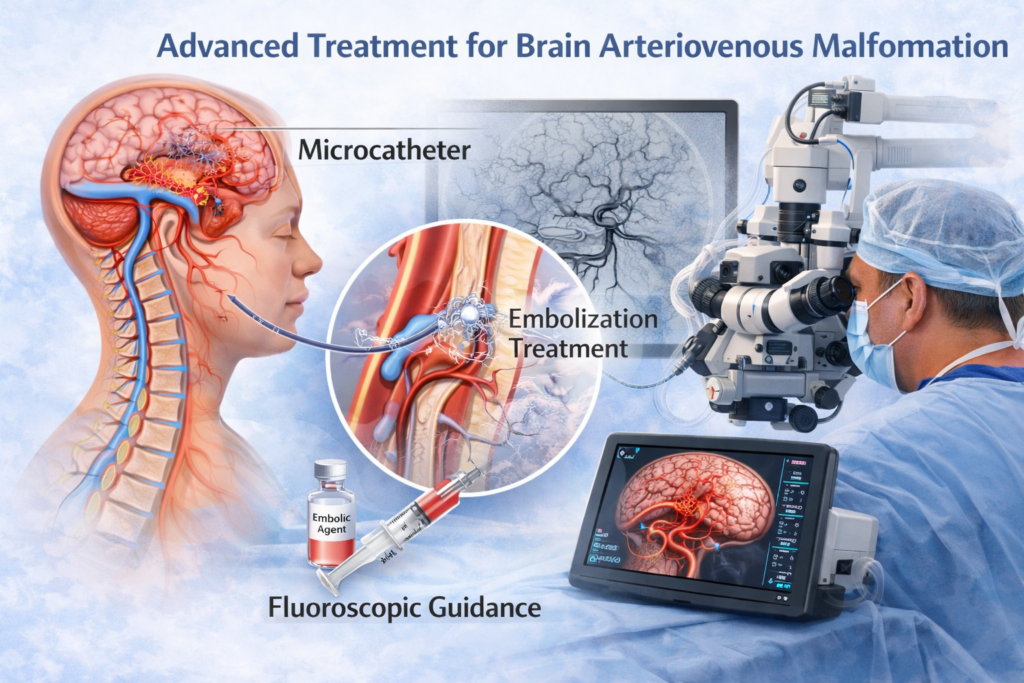
- Endovascular treatment such as Brain AVM Embolisation
- Microsurgical removal (in selected cases)
- Stereotactic radiosurgery
- Medical management for symptoms like seizures
Risks vs Benefits of Brain AVM Treatment
Who benefits most?
- Patients with high rupture risk
- Those with previous brain bleeding
- Symptomatic AVMs
General risks (high-level overview):
- Bleeding
- Stroke
- Neurological deficits (rare in expert centers)
Why expert care matters:
- Advanced imaging improves precision
- Multidisciplinary planning reduces complications
- Experienced interventional neuroradiologists improve outcomes
The benefits of preventing brain hemorrhage usually outweigh treatment risks.
Recovery After Brain AVM Treatment
What to expect after treatment:
- Close monitoring in the first 24–48 hours
- Imaging to confirm AVM closure
- Gradual return to daily activities
Recovery varies depending on:
- Type of treatment used
- Whether bleeding occurred before treatment
- Overall neurological status
Rehabilitation, seizure control, and follow-up scans play a vital role in long-term recovery.
Why Choose Our Stroke Treatment Centre?
- 24×7 advanced stroke treatment and neurovascular care
- High-resolution MRI and cerebral angiography
- Experienced interventional neuroradiologists
- Multidisciplinary team of neurology, neurosurgery, and critical care specialists
- Patient-focused, evidence-based treatment planning
Your brain deserves expert care at the right time.
FAQs on Brain AVM Treatment
Is a brain AVM life-threatening?
Yes, an untreated Brain AVM can cause brain hemorrhage, stroke, or seizures.
Can a brain AVM be cured?
Many Brain AVMs can be completely treated or permanently closed with modern techniques.
Is brain AVM Embolisation safe?
When performed at expert centers, embolisation is a safe and effective treatment option.
What is the success rate of brain AVM treatment?
Success depends on AVM size, location, and treatment approach, but outcomes are excellent in specialized centers.