Dural Sinus Stenting Treatment for Intracranial Hypertension
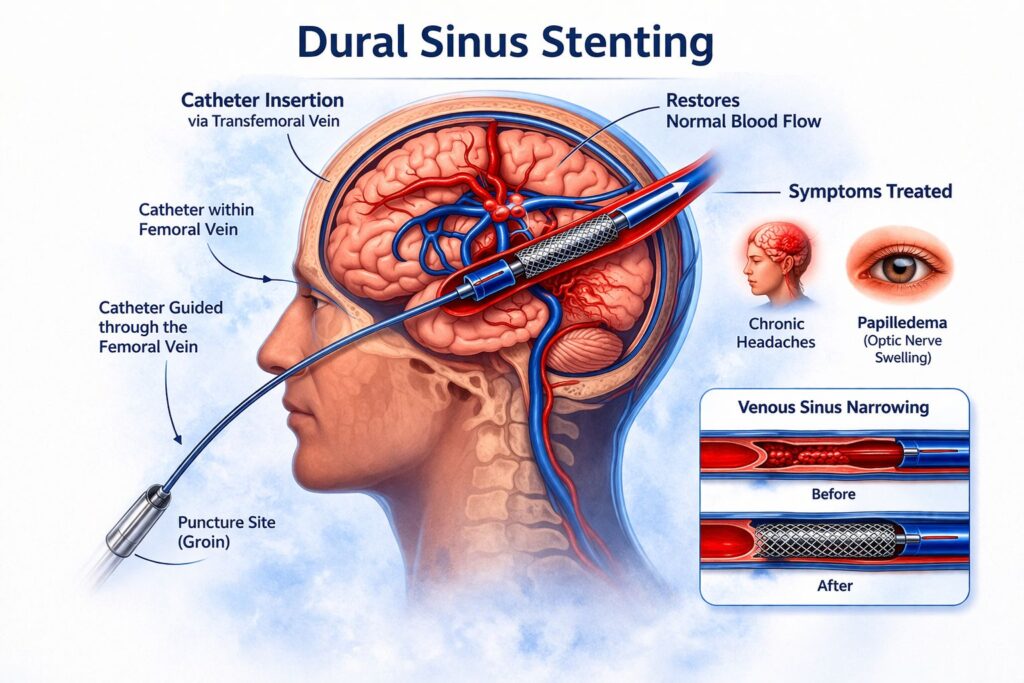
Dural sinus stenting is a highly specialized, minimally invasive procedure used to treat conditions associated with impaired venous drainage in the brain, particularly Idiopathic Intracranial Hypertension. If left untreated, this condition can lead to persistent headaches, visual disturbances, and in severe cases, permanent vision loss. At a leading brain stroke centre, timely diagnosis and intervention by an experienced brain stroke physician are critical to achieving optimal outcomes.
What Is Dural Sinus Stenting?
Dural sinus stenting involves placing a tiny mesh tube (stent) inside a narrowed venous sinus—typically the transverse or sigmoid sinus—to restore normal blood flow from the brain. This helps reduce intracranial pressure and alleviates symptoms associated with venous outflow obstruction.
Unlike traditional surgical approaches, this procedure is performed via a catheter inserted into a blood vessel, making it safer, faster, and associated with shorter recovery times.
Who Needs Dural Sinus Stenting?
This procedure is recommended for patients who:
Have confirmed venous sinus stenosis (narrowing)
Suffer from chronic headaches or pressure-related symptoms
Experience visual disturbances or papilledema (optic nerve swelling)
Do not respond to medications like acetazolamide
Are diagnosed with Idiopathic Intracranial Hypertension with pressure gradients across the sinus
A skilled brain stroke physician will evaluate imaging studies such as MRV (Magnetic Resonance Venography) and perform pressure measurements before recommending this intervention.
How the Procedure Is Performed
Dural sinus stenting is carried out in a neuro-interventional suite under expert supervision. The steps include:
Access: A catheter is inserted through the femoral vein (in the groin).
Navigation: Using real-time imaging, the catheter is guided to the affected dural sinus.
Assessment: Pressure gradients across the narrowed segment are measured.
Stent Placement: A stent is deployed to widen the narrowed sinus.
Confirmation: Blood flow improvement is verified immediately.
The procedure typically takes 1–2 hours and is performed under local or general anesthesia, depending on the patient’s condition.
Benefits of Dural Sinus Stenting
Choosing treatment at a reputed brain stroke centre ensures access to advanced technology and experienced specialists. Key benefits include:
Immediate reduction in intracranial pressure
Significant relief from chronic headaches
Improvement or stabilization of vision
Minimally invasive with no major surgical incision
Short hospital stay and faster recovery
Risks and Safety Considerations
While dural sinus stenting is generally safe, like any medical procedure, it carries some risks:
Bleeding or infection at the catheter site
Stent thrombosis (rare, minimized with medication)
Vessel injury (extremely rare in expert hands)
Working with a highly qualified brain stroke physician significantly reduces these risks. Proper patient selection and post-procedure care are essential for long-term success.
Recovery and Aftercare
Most patients are discharged within 24–48 hours. Recovery guidelines include:
Use of prescribed blood-thinning medications
Regular follow-up imaging to monitor stent function
Gradual return to normal activities within a few days
Patients often report noticeable symptom improvement within days to weeks after the procedure.
Why Choose a Specialized Brain Stroke Centre?
Dural sinus stenting requires precision, expertise, and advanced infrastructure. A dedicated brain stroke centre offers:
Comprehensive neurovascular evaluation
Access to cutting-edge imaging and intervention tools
Multidisciplinary care involving neurologists, neurosurgeons, and interventional radiologists
Proven track record in stroke and neurovascular procedures
Choosing the right centre directly impacts both safety and outcomes.
When to Consult a Brain Stroke Physician
If you experience persistent headaches, visual changes, or symptoms suggestive of raised intracranial pressure, do not delay evaluation. Early diagnosis can prevent complications and improve quality of life.
A consultation with an experienced brain stroke physician at a trusted brain stroke centre ensures accurate diagnosis and access to advanced treatments like dural sinus stenting.
FAQs
1. What is dural sinus stenting?
Dural sinus stenting is a minimally invasive procedure used to treat venous sinus narrowing and reduce pressure caused by Idiopathic Intracranial Hypertension.
2. Is dural sinus stenting safe?
Yes, it is generally safe when performed by an experienced brain stroke physician at a specialized brain stroke centre.
3. How long is the recovery time?
Most patients are discharged within 24–48 hours and resume normal activities within a few days.
4. Who needs dural sinus stenting?
Patients with Idiopathic Intracranial Hypertension who do not respond to medications like Acetazolamide may require this procedure.
5. Is the procedure permanent?
It provides long-term relief in most cases, but follow-up is needed to monitor outcomes.
- 022-61305089
- drnishant@stroketreatment.in
- nishantaditya@yahoo.com