
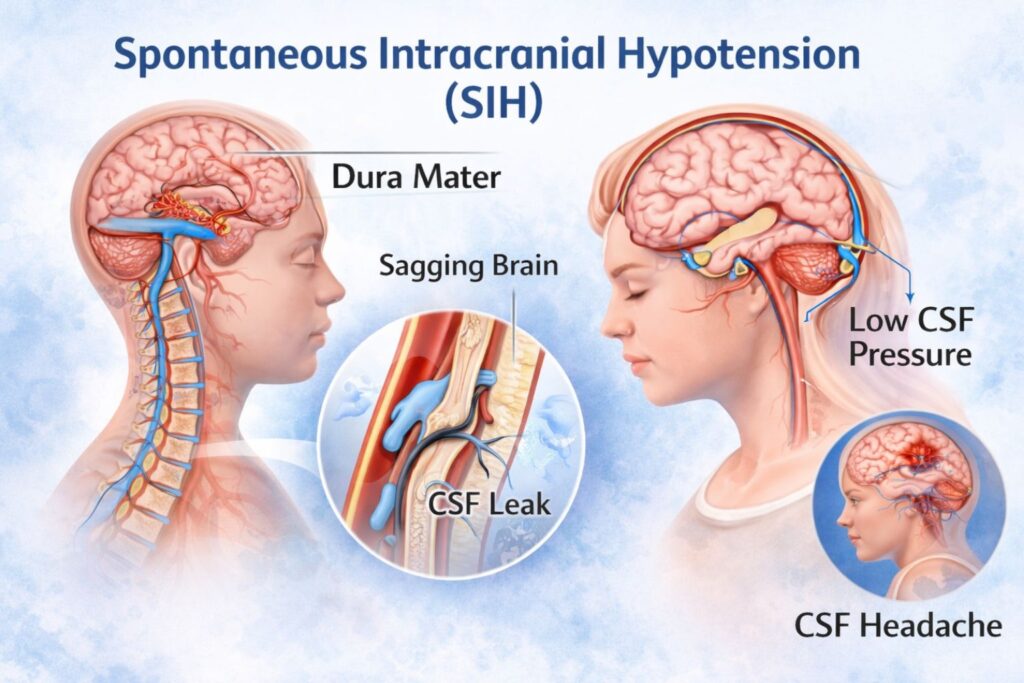
Spontaneous Intracranial Hypotension (SIH) is a neurological condition caused by low cerebrospinal fluid (CSF) pressure, usually due to a spontaneous leak of CSF from the spine. Unlike intracranial hypertension, where pressure is high, SIH occurs when CSF volume drops, leading to downward sagging of the brain.
SIH is an underdiagnosed but highly treatable condition that is often mistaken for other headaches or neurological disorders. With early recognition, accurate diagnosis, and timely treatment, patients can experience significant improvement and, in many cases, complete recovery with a return to normal daily life.
What Is Spontaneous Intracranial Hypotension?
Cerebrospinal fluid surrounds the brain and spinal cord, acting as a protective cushion and helping maintain normal intracranial pressure. In SIH, a spontaneous tear or area of weakness in the spinal dura allows CSF to leak out, leading to a reduction in this pressure.
As intracranial pressure drops, the brain can sag slightly within the skull, placing tension on pain-sensitive structures and blood vessels. This results in characteristic symptoms, most notably orthostatic headache—a headache that worsens when standing or sitting upright and improves when lying down. Over time, additional symptoms such as neck pain, nausea, visual disturbances, or hearing changes may also develop if the condition remains untreated.
Causes of Spontaneous Intracranial Hypotension
In most cases, SIH occurs without trauma or prior medical procedures. Possible causes include:
- Weakness or tears in the spinal dura
- Connective tissue disorders (e.g., Marfan syndrome, Ehlers‑Danlos syndrome)
- Bone spurs are causing a dural puncture
- Minor strain, coughing, or physical exertion triggering a leak
Often, the exact cause of the leak cannot be identified.
Symptoms of Spontaneous Intracranial Hypotension
Symptoms may vary in severity and often worsen when upright:
- Severe headache relieved by lying down
- Neck pain or stiffness
- Nausea and vomiting
- Dizziness
- Blurred or double vision
- Hearing changes or ringing in the ears
- Cognitive difficulties or confusion in severe cases
Orthostatic headache is the hallmark symptom of SIH.
Diagnosis of Spontaneous Intracranial Hypotension
Diagnosis can be challenging and requires a high index of suspicion. Tests may include:
- MRI brain with contrast, showing brain sagging or meningeal enhancement
- MRI spine to detect CSF leaks
- CT myelography or digital subtraction myelography to localize the exact leak site
- Lumbar puncture, showing low opening pressure (performed selectively)
Early imaging is key to preventing prolonged symptoms.
Treatment Options for Spontaneous Intracranial Hypotension
Treatment is based on symptom severity and the persistence of the leak.
Conservative Management
- Bed rest
- Increased fluid intake
- Caffeine therapy
- Pain management
Mild cases may resolve spontaneously with conservative care.
Epidural Blood Patch (EBP)
- The most common and effective treatment
- The patient’s own blood is injected into the epidural space to seal the leak
- Can provide rapid symptom relief
Targeted Interventional Treatment
- Image‑guided targeted blood patches or fibrin glue injections
- Endovascular or minimally invasive techniques when the leak site is known
Surgical Repair
- Reserved for persistent or complex leaks
- Direct surgical closure of the dural defect
Recovery and Long‑Term Outlook
Most patients recover completely with appropriate treatment.
- Symptoms often improve rapidly after a successful blood patch
- Some patients may require repeat procedures
- Long‑term follow‑up ensures symptom resolution and prevents recurrence
Early diagnosis significantly improves outcomes and quality of life.
Conclusion
Spontaneous Intracranial Hypotension is a reversible cause of severe headache and neurological symptoms that is often overlooked. Recognizing the hallmark positional headache and obtaining appropriate imaging are crucial for accurate diagnosis.
Because SIH can mimic other serious neurological conditions, evaluation at a specialized stroke treatment centre with advanced neuroimaging and interventional expertise is essential. With modern imaging, interventional techniques, and timely treatments such as epidural blood patching, most patients can achieve a full recovery and return to their normal lives.
Yes. If untreated, SIH can lead to chronic headaches, neurological deficits, or subdural hematomas.
SIH headaches are positional—worse when standing and better when lying down—unlike migraines
Yes. Some patients may experience recurrence and require repeat treatment.
No. Most cases respond well to epidural blood patches and conservative treatment.
Many patients experience improvement within days to weeks after treatment, depending on the severity of their condition.