Stroke symptoms often appear suddenly and should never be ignored. Quick medical treatment can help restore blood flow to the brain, reduce brain damage, and improve recovery outcomes.
Many people delay treatment because symptoms seem mild or temporary. However, even short-lasting neurological symptoms may indicate a serious interruption in blood supply to the brain.
Recognizing stroke warning signs early can help patients and families seek emergency medical care faster. Early diagnosis at a specialized brain stroke centre can help restore blood flow quickly and reduce long-term neurological damage.
Sudden Weakness or Numbness
One of the most common stroke warning signs is sudden weakness affecting:
- the face
- arm
- leg
- or one entire side of the body
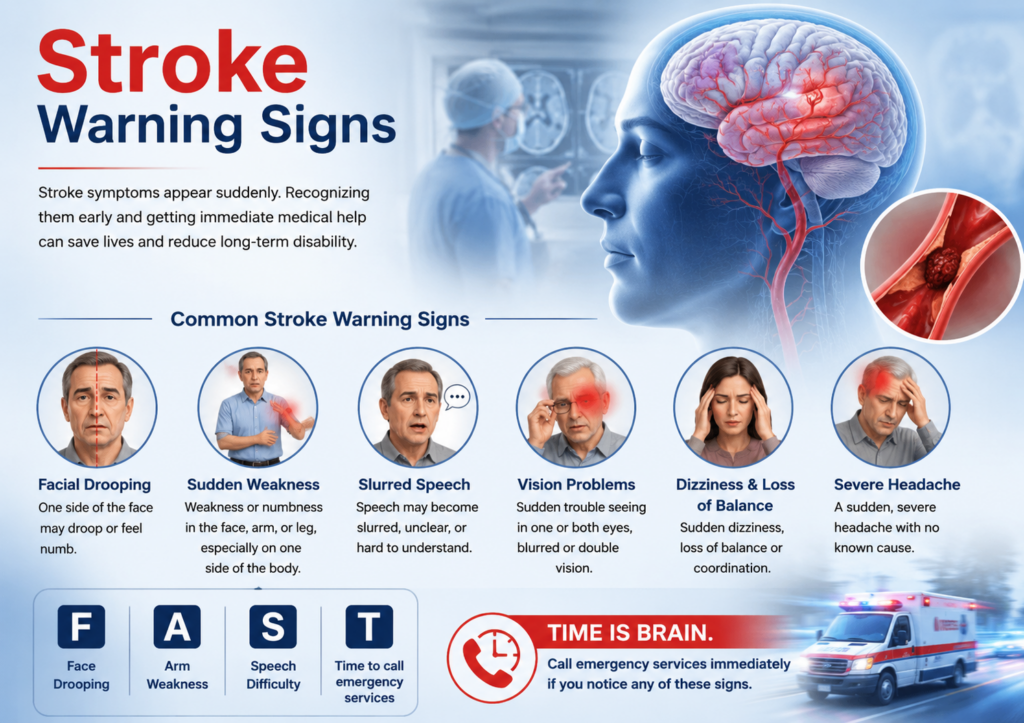
Some people notice difficulty lifting one arm, walking properly, or holding objects. Weakness that appears suddenly should always be evaluated urgently. Sudden weakness affecting one side of the body may indicate an acute stroke requiring emergency treatment.
Facial Drooping
A stroke may cause one side of the face to droop or feel numb. Smiling may appear uneven, and the mouth may shift to one side. Facial asymmetry is one of the easiest early stroke symptoms to recognize.
Slurred Speech or Difficulty Speaking
Stroke can affect the brain areas responsible for speech and communication.
Symptoms may include:
- slurred speech
- difficulty finding words
- confusion while speaking
- inability to understand conversation
Sudden speech difficulty is considered a medical emergency. Speech difficulty caused by reduced blood flow to the brain may require emergency clot removal procedures such as mechanical thrombectomy
Sudden Vision Changes
Some strokes affect vision suddenly. Patients may experience:
- blurred vision
- double vision
- partial vision loss
- difficulty focusing
Vision symptoms are sometimes mistaken for eye problems, which can delay treatment.
Dizziness and Loss of Balance
Stroke may also affect coordination and balance.
Warning signs include:
- sudden dizziness
- difficulty walking
- imbalance
- loss of coordination
These symptoms should be taken seriously, especially when associated with weakness or speech problems.
What Is a Mini Stroke?
A transient ischemic attack (TIA), commonly called a mini stroke, causes temporary stroke symptoms that resolve within minutes or hours. Even though symptoms improve, a mini stroke can be an important warning sign before a major stroke occurs.
Mini stroke symptoms may include:
- temporary weakness
- facial drooping
- slurred speech
- brief confusion
- temporary vision loss
Urgent medical evaluation is still necessary.
Use the FAST Test to Recognize Stroke
The FAST test helps identify stroke symptoms quickly.
F — Face Drooping
Does one side of the face droop while smiling?
A — Arm Weakness
Does one arm drift downward when raised?
S — Speech Difficulty
Is speech slurred or difficult to understand?
T — Time to Seek Emergency Care
Immediate treatment is critical during a stroke.
Why Early Treatment Matters
During a stroke, brain cells begin to die within minutes. Delayed treatment increases the risk of:
- paralysis
- speech loss
- permanent disability
- memory problems
Modern stroke treatments are most effective when performed early after symptom onset. Advanced neurointerventional procedures can help reopen blocked blood vessels and improve recovery outcomes in selected patients.
When Should You Seek Emergency Care?
Seek immediate medical attention if you notice:
- sudden weakness
- facial drooping
- slurred speech
- sudden confusion
- vision loss
- severe dizziness
- balance problems
Even temporary neurological symptoms should never be ignored. Some patients may require paralysis treatment, rehabilitation, physiotherapy, or long-term neurological recovery support after a stroke.
Conclusion
Stroke warning signs often appear suddenly and should never be ignored. Symptoms such as facial drooping, slurred speech, sudden weakness, dizziness, or vision problems may indicate reduced blood flow to the brain and require urgent medical evaluation.
Early diagnosis and treatment at an experienced brain stroke centre can help reduce complications, improve recovery outcomes, and prevent long-term neurological damage.