
Spinal CSF Leak & CSF-Venous Fistula Embolization
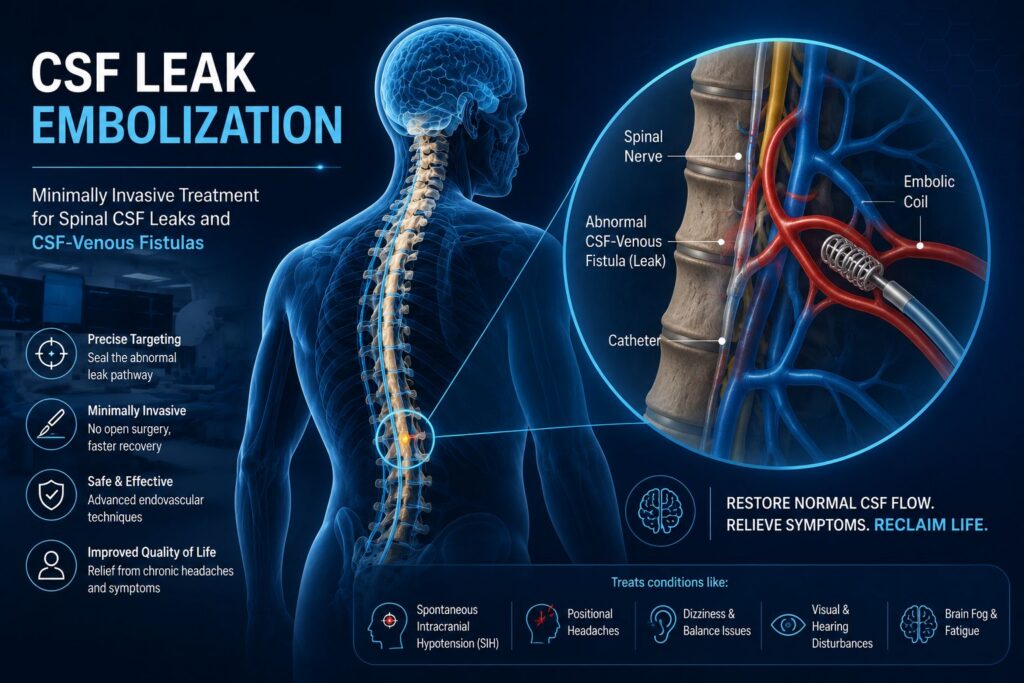
Advanced Treatment for Spinal CSF Leaks and CSF-Venous Fistulas
A cerebrospinal fluid (CSF) leak occurs when the protective fluid surrounding the brain and spinal cord escapes through a defect in the dura (the outer covering of the nervous system). When CSF volume decreases, patients may develop severe headaches, dizziness, neck pain, visual disturbances, hearing changes, and other neurological symptoms.
At our stroke centre, Dr. Nishant Aditya provides advanced neurovascular and endovascular treatment options for selected patients with spinal CSF leaks and CSF-venous fistulas. Using minimally invasive embolization techniques, the abnormal pathway responsible for CSF leakage can be sealed without major surgery, helping restore normal cerebrospinal fluid dynamics and improve quality of life.
What Is a CSF Leak?
Cerebrospinal fluid (CSF) is a clear fluid that cushions and protects the brain and spinal cord.
A CSF leak develops when there is an abnormal opening that allows this fluid to escape. The leak may occur due to:
- Spontaneous weakness of the dura
- Connective tissue disorders
- Previous spinal procedures
- Trauma or injury
- Degenerative spinal changes
- CSF-venous fistulas
When CSF continuously leaks, pressure around the brain decreases, resulting in a condition known as Spontaneous Intracranial Hypotension (SIH). This can significantly affect daily activities and may remain undiagnosed for months or years.
Symptoms of a CSF Leak
Patients with spinal CSF leaks commonly experience:
- Severe headaches that worsen when standing
- Relief of headache when lying down
- Neck pain and stiffness
- Dizziness or imbalance
- Tinnitus (ringing in the ears)
- Blurred or double vision
- Nausea
- Brain fog and concentration difficulties
- Fatigue
- Hearing changes
Persistent positional headaches should never be ignored, especially when symptoms worsen over the course of the day.
What Is CSF Leak Embolization?
CSF Leak Embolization is a minimally invasive endovascular procedure used to treat certain spinal CSF leaks, particularly those caused by CSF-venous fistulas.
A CSF-venous fistula is an abnormal connection between the spinal CSF space and nearby veins. This allows cerebrospinal fluid to drain continuously into the venous system, causing intracranial hypotension and chronic symptoms.
Using advanced image-guided techniques, the abnormal venous channel is identified and sealed with embolic material, eliminating the leak source and restoring normal CSF pressure.
Who May Need CSF Leak Embolization?
CSF leak embolization may be recommended for patients who:
- Have confirmed spinal CSF leaks
- Have CSF-venous fistulas been identified on imaging
- Continue to experience symptoms despite conservative treatment
- Have recurrent symptoms after epidural blood patch treatment
- Have chronic spontaneous intracranial hypotension
- Require a minimally invasive alternative to surgery
Each patient undergoes a detailed evaluation to determine whether embolization is the most appropriate treatment option.
How Is a CSF Leak Diagnosed?
Accurate diagnosis is essential because CSF leaks are often mistaken for migraine, cervical spondylosis, or other headache disorders.
Investigations may include:
MRI Brain – MRI may reveal characteristic findings associated with low CSF pressure.
MRI Spine – Helps identify potential leak locations within the spinal column.
CT Myelography – Provides detailed imaging to localize the leak.
Dynamic Myelography – Used in complex cases to identify fast-flow leaks and CSF-venous fistulas.
Digital Subtraction Angiography (DSA) – Advanced imaging may be used during treatment planning in selected patients.
How Is CSF Leak Embolization Performed?
The procedure is performed in a specialized neurointerventional suite under image guidance.
Procedure Steps
- A small catheter is inserted through a vein.
- Advanced imaging is used to identify the abnormal fistula.
- Microcatheters are navigated precisely to the target vessel.
- Specialized embolic agents are delivered to seal the abnormal connection.
- Blood flow is preserved while the leak pathway is closed.
The procedure is performed without open surgery and typically requires a short hospital stay.
Benefits of CSF Leak Embolization
Compared with traditional surgical approaches, embolization offers several advantages:
- Minimally invasive treatment
- No large surgical incision
- Reduced recovery time
- Precise targeting of the leak source
- Short hospital stay
- Faster return to daily activities
- Reduced risk of recurrent symptoms
- Effective treatment for selected CSF-venous fistulas
Recovery After CSF Leak Embolization
Most patients recover quickly following the procedure.
Recovery typically includes:
- Short observation period
- Gradual return to routine activities
- Follow-up imaging when required
- Ongoing monitoring of symptom improvement
Many patients notice progressive improvement in headache severity and overall quality of life over the weeks following treatment.
Why Choose Dr. Nishant Aditya for CSF Leak Treatment?
Dr. Nishant Aditya is an experienced Interventional Neuroradiologist specializing in minimally invasive neurovascular and spinal vascular procedures.
At our brain stroke centre, patients benefit from:
- Advanced neurointerventional expertise
- Comprehensive evaluation of CSF leak disorders
- Modern imaging technology
- Personalized treatment planning
- Evidence-based care
- Access to minimally invasive endovascular procedures
The goal is to accurately identify the source of symptoms and provide the most effective treatment while minimizing recovery time and procedural risk.
What is a CSF leak?
What are the symptoms of a spinal CSF leak?
What is a CSF-venous fistula?
What is the recovery time after cerebral angiography?
Is CSF leak embolization a surgery?
How long does recovery take after CSF leak embolization?
- 022-61305089
- drnishant@stroketreatment.in
- nishantaditya@yahoo.com