
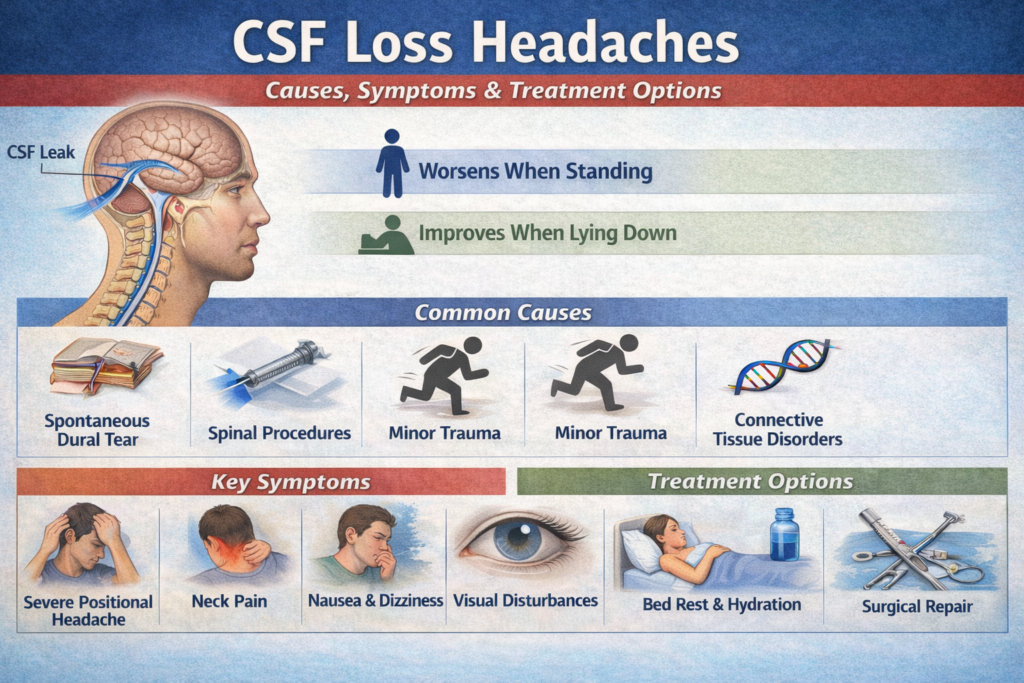
Headaches that worsen when standing and improve when lying down are often misdiagnosed as migraine or tension-type headaches. However, in many cases, the underlying cause may be cerebrospinal fluid (CSF) loss, also known as a CSF loss headache or low-pressure headache.
At Stroke Treatment, we frequently evaluate patients with persistent, disabling headaches that were previously treated as migraine without improvement. Early diagnosis of CSF loss is essential because appropriate treatment can provide rapid — and sometimes dramatic — relief.
What Is a CSF Loss Headache?
A CSF loss headache occurs when cerebrospinal fluid (CSF) leaks through a small tear or defect in the dura, the tough outer membrane that surrounds the brain and spinal cord.
CSF plays a critical role in:
- Cushioning and protecting the brain
- Maintaining normal intracranial pressure
- Providing nutrients to the nervous system
When CSF volume decreases due to a leak, intracranial pressure drops. As a result, when a person stands upright, gravity causes the brain to sag slightly inside the skull. This stretching of pain-sensitive structures produces a characteristic positional headache that:
- Worsens when sitting or standing
- Improves significantly when lying flat
This positional pattern is the hallmark of spontaneous intracranial hypotension.
Common Causes of CSF Leaks
CSF leaks may develop due to the following reasons:
1. Spontaneous Dural Tears
Small tears can occur without any obvious trigger.
2. Minor Trauma
Even seemingly insignificant injuries may lead to a leak.
3. Spinal Procedures
- Lumbar puncture
- Epidural anesthesia
4. Spine Surgery
Post-operative dural defects can result in CSF leakage.
5. Connective Tissue Disorders
Conditions such as Ehlers-Danlos syndrome can weaken the dura, increasing the risk of leaks.
In many patients, no clear cause is identified. These cases are classified as spontaneous intracranial hypotension (SIH).
Symptoms of a CSF Loss Headache
The most important feature is the positional nature of the headache. However, additional symptoms may include:
- Headache that worsens when upright
- Significant relief when lying down
- Neck pain or stiffness
- Nausea and vomiting
- Sensitivity to light (photophobia)
- Sensitivity to sound (phonophobia)
- Dizziness
- Visual disturbances
In untreated cases, patients may also develop:
- Tinnitus (ringing in the ears)
- Hearing changes
- Cognitive difficulties
- Poor concentration
Because these symptoms overlap with migraine and other neurological disorders, patients are frequently misdiagnosed.
If you are experiencing unusual or persistent headaches, evaluation at a trusted stroke centre can help determine whether a CSF leak is the underlying cause.
How Is CSF Loss Diagnosed?
Accurate diagnosis requires both clinical evaluation and imaging studies.
MRI Brain with Contrast
May show characteristic signs of low CSF pressure, such as:
- Diffuse meningeal enhancement
- Brain sagging
- Subdural fluid collections
Spinal MRI or CT Myelography
Used to locate the exact site of the leak.
Lumbar Puncture
May demonstrate low opening pressure, confirming intracranial hypotension. Identifying the leak location is critical because it guides the most effective treatment strategy.
Treatment Options for CSF Loss Headache
Treatment depends on the severity, duration, and cause of the CSF leak.
Conservative Management
Mild or early cases may respond to:
- Bed rest
- Increased fluid intake
- Caffeine therapy
- Pain management
Some patients experience spontaneous healing with these measures.
Epidural Blood Patch (Gold Standard Treatment)
The epidural blood patch is the most effective non-surgical treatment.
Procedure overview:
- A small amount of the patient’s own blood is injected into the epidural space
- The blood forms a clot
- The clot seals the leak
- Normal CSF pressure is restored
Many patients report significant improvement within hours to days.
Surgical Repair
Surgery is reserved for:
- Persistent leaks
- Complex spinal defects
- Cases not responding to repeated blood patches
Modern microsurgical techniques allow targeted repair with high success rates.
Recovery and Prognosis
The prognosis for CSF leak headaches is generally excellent when treated early.
Most patients experience:
- Rapid symptom relief
- Full return to daily activities
- Reduced risk of chronic headache
Delayed diagnosis, however, may lead to prolonged suffering and complications. Early neurological consultation is strongly recommended.
When Should You See a Neurologist?
You should seek evaluation if you experience:
- Headaches that clearly worsen when standing
- New headaches after spinal procedures
- Persistent headaches unresponsive to migraine treatment
- Unexplained daily headaches
Early neurological assessment helps prevent misdiagnosis and unnecessary investigations.
Why CSF Loss Headache Is Often Misdiagnosed
CSF loss headaches are frequently mistaken for:
- Migraine
- Tension-type headache
- Cervicogenic headache
The key differentiating factor is positional worsening. Recognizing this pattern allows for faster diagnosis and effective treatment.
Conclusion
CSF loss headache is a treatable yet frequently overlooked cause of severe, disabling head pain. Recognizing the classic positional nature of the headache is essential for early diagnosis. With modern imaging techniques and treatments such as the epidural blood patch, most patients achieve complete recovery.
If you suspect a CSF leak or have persistent positional headaches, consult the specialists at the stroke treatment centre for expert neurological evaluation and personalized care.