Advanced Cerebral Angiography (DSA Brain)
Advanced Brain Blood Vessel Imaging at a Specialised Brain Stroke Centre
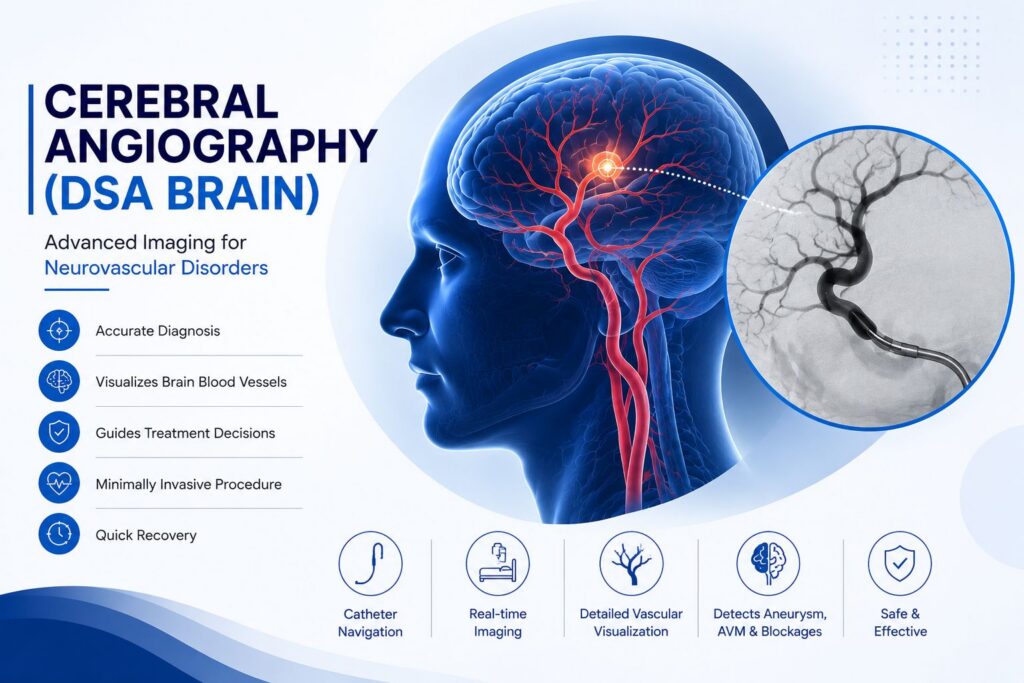
Cerebral angiography, also known as Digital Subtraction Angiography (DSA Brain), is an advanced neurovascular imaging procedure used to evaluate blood vessels in the brain and neck. It is considered the gold standard investigation for diagnosing stroke, brain aneurysm, AVM, artery narrowing, and other complex neurovascular disorders.
At our specialised brain stroke centre, cerebral angiography is performed using advanced imaging technology for accurate diagnosis and treatment planning. The procedure helps brain stroke physicians evaluate blood flow abnormalities and guide minimally invasive neurointerventional procedures.
At StrokeTreatment.in, Dr. Nishant Aditya performs advanced DSA brain procedures using modern neurovascular imaging and interventional neuroradiology techniques.
What Is Cerebral Angiography (DSA Brain)?
Cerebral angiography is a minimally invasive imaging procedure used to visualise blood vessels inside the brain using contrast dye and specialised X-ray imaging.
The procedure helps detect:
- Brain aneurysms
- Brain AVMs (Arteriovenous Malformations)
- Stroke-related artery blockage
- Brain artery narrowing
- Carotid artery disease
- Vascular malformations
- Brain hemorrhage causes
- Abnormal blood vessel connections
DSA Brain provides highly detailed images of brain circulation and is often used before procedures such as mechanical thrombectomy, intracranial stenting, or flow diversion treatment.
Why Is DSA Brain Performed?
DSA Brain is commonly recommended for patients with:
- Sudden neurological symptoms
- Brain stroke symptoms
- Severe unexplained headache
- Brain hemorrhage
- Suspected aneurysm
- Recurrent mini strokes
- Brain artery blockage
- Abnormal MRI or CT scan findings
Patients experiencing weakness, speech difficulty, facial drooping, or sudden neurological deficits may require urgent evaluation at a specialised stroke centre.
Some symptoms may overlap with common stroke warning signs and require immediate medical attention.
How Cerebral Angiography Is Performed
Cerebral angiography is performed in a specialised neurointerventional cath lab under sterile conditions.
Procedure Steps
- A small catheter is inserted through the groin or wrist artery.
- The catheter is guided into the blood vessels supplying the brain.
- Contrast dye is injected into the arteries.
- Advanced X-ray imaging captures detailed pictures of brain circulation.
- The catheter is safely removed after the procedure.
The procedure usually takes 30 minutes to 1 hour, depending on complexity.
Conditions Diagnosed Using DSA Brain
Cerebral angiography helps diagnose several important neurovascular conditions, including:
Brain Aneurysm
DSA Brain helps accurately identify aneurysm size, location, and blood flow patterns before procedures such as brain aneurysm coiling.
Acute Ischemic Stroke
The procedure helps identify blocked brain arteries in patients requiring emergency acute stroke treatment.
Brain AVM and AV Fistula
Cerebral angiography plays an important role in diagnosing abnormal blood vessel connections and treatment planning.
Intracranial Artery Narrowing
DSA Brain helps evaluate severe artery narrowing that may require intracranial stenting.
Advantages of Cerebral Angiography
Compared to routine imaging, DSA Brain offers several advantages:
- Highly detailed brain vessel imaging
- Accurate diagnosis of neurovascular disorders
- Real-time blood flow evaluation
- Better treatment planning
- Minimally invasive procedure
- Helps guide advanced neurointerventional treatment
It remains one of the most important diagnostic tools in advanced stroke and neurovascular care.
Recovery After DSA Brain
Most patients recover quickly after cerebral angiography.
After the procedure:
- Patients are monitored for a few hours
- Mild discomfort at the catheter site may occur temporarily
- Adequate hydration is advised
- Most patients can resume routine activities within 24 hours
Recovery instructions may vary depending on the neurological condition and associated treatment.
Who May Need Cerebral Angiography?
Cerebral angiography may be recommended for patients with:
- Suspected brain aneurysm
- Brain hemorrhage
- Stroke or mini stroke
- Brain artery narrowing
- AVM or vascular malformations
- Unexplained neurological symptoms
- Complex neurovascular disorders
Early diagnosis at a specialised brain stroke centre can help prevent serious neurological complications.
Why Choose Our Brain Stroke Centre?
At StrokeTreatment.in, we provide advanced neurovascular diagnosis and minimally invasive stroke care using modern imaging technology.
Our Brain Stroke Centre offers:
- Advanced DSA Brain Imaging
- Neurointerventional expertise
- Modern cath lab technology
- Emergency stroke evaluation
- Comprehensive neurovascular care
- Personalised treatment planning
Dr. Nishant Aditya specialises in advanced interventional neuroradiology procedures for stroke, aneurysm, AVM, and complex brain vascular disorders.
Is cerebral angiography painful?
How long does DSA Brain take?
Is DSA Brain safe?
What is the recovery time after cerebral angiography?
Why is DSA Brain considered important?
- 022-61305089
- drnishant@stroketreatment.in
- nishantaditya@yahoo.com