
Minimally Invasive Treatment to Reduce Blood Supply to Tumors
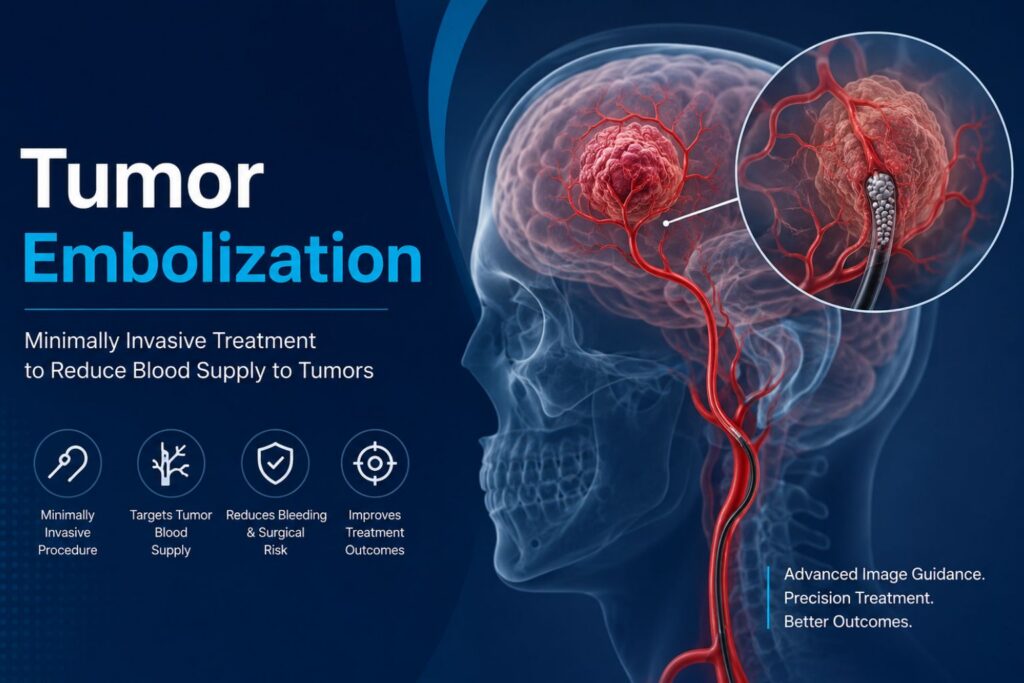
Tumor embolization is a minimally invasive endovascular procedure used to block or reduce the blood supply to a tumor. By restricting blood flow, the procedure can help shrink the tumor, reduce symptoms, decrease bleeding risk, and improve the safety and effectiveness of subsequent treatments such as surgery.
Tumor embolization is commonly performed for highly vascular tumors that receive a significant blood supply through abnormal or enlarged blood vessels. The procedure is performed using advanced imaging guidance and does not require a large surgical incision.
In many cases, this procedure is often used as part of a comprehensive treatment plan developed by a multidisciplinary team of specialists.
What Is Tumor Embolization?
Tumor embolization is a procedure that involves intentionally blocking the blood vessels supplying a tumor. Through a small catheter inserted into a blood vessel, the specialist delivers specialized embolic materials directly to the arteries feeding the tumor.
Once embolization reduces the blood supply, the tumor may become easier to treat, less likely to bleed, and more manageable during surgery. An interventional neuroradiologist or Interventional Radiologist commonly performs the procedure using real-time imaging guidance.
When Is This Procedure Recommended?
This procedure may be recommended in situations where a tumor has a significant blood supply and reducing blood flow can improve treatment outcomes.
The procedure may be considered for:
- Highly vascular brain tumors
- Skull base tumors
- Meningiomas
- Head and neck tumors
- Tumors causing significant symptoms
- Tumors associated with a high risk of bleeding during surgery
- Patients requiring preoperative tumor management
The suitability of embolization depends on the location, size, and blood supply of the tumor.
What Types of Tumors Can Be Treated with Embolization?
It is most commonly performed for tumors that receive a rich blood supply from nearby arteries.
Examples may include:
- Meningiomas
- Glomus tumors
- Hemangioblastomas
- Juvenile nasopharyngeal angiofibromas
- Selected metastatic tumors
- Certain skull base tumors
Not all tumors are suitable for embolization, and treatment decisions are based on detailed imaging studies and clinical evaluation.
How Is the Procedure Performed?
The procedure is performed in a specialized angiography suite using advanced imaging technology.
1. Vascular Access
A small catheter is inserted into an artery, usually through the groin or wrist.
2. Tumor Blood Supply Mapping
Detailed cerebral angiography is performed to identify the arteries supplying the tumor.
3. Catheter Navigation
The specialist carefully guides a microcatheter into the blood vessels feeding the tumor.
4. Embolization
Special embolic agents are delivered through the catheter to reduce or block blood flow to the tumor.
5. Final Imaging Assessment
Additional imaging confirms successful reduction of the blood supply to the target area.
Benefits of Tumor Embolization
It offers several potential benefits, including:
- Reduced blood flow to the tumor
- Lower risk of bleeding during surgery
- Improved surgical visibility
- Minimally invasive treatment
- Reduced need for blood transfusions
- Shorter recovery compared to open procedures
- Enhanced treatment planning
For selected patients, embolization can significantly improve the safety and effectiveness of subsequent tumor treatment.
Recovery After Tumor Embolization
Doctors monitor most patients for a period following the procedure before they return home or proceed with planned treatment.
Recovery may involve:
- Short hospital observation
- Management of mild discomfort
- Follow-up imaging studies
- Monitoring for symptom improvement
- Planning for surgery or additional treatment if required
Recovery time varies depending on the type of tumor, the extent of embolization, and the patient’s overall health.
Potential Risks and Complications
As with any endovascular procedure, tumor embolization carries potential risks.
These may include:
- Bleeding
- Infection
- Blood vessel injury
- Temporary swelling around the tumor
- Neurological complications
- Incomplete embolization
- Reaction to contrast dye
The risks and benefits are carefully evaluated before treatment is recommended.
Why Is Tumor Embolization Performed Before Surgery?
Many vascular tumors can bleed significantly during surgical removal. By reducing the blood supply to the tumor beforehand, embolization can help make surgery safer and more effective.
Preoperative embolization may:
- Reduce intraoperative blood loss
- Improve surgical access
- Shorten operating time
- Improve visualization of the tumor
- Lower the risk of complications during surgery
This approach is commonly used for selected brain and skull base tumors.
Who May Benefit from Tumor Embolization?
Patients may benefit from this procedure if they:
- Have a highly vascular tumor
- Are planning surgical tumor removal
- Have symptoms related to the tumor’s blood supply
- Are considered suitable candidates based on imaging findings
- Require a minimally invasive treatment approach
A detailed evaluation is necessary to determine whether embolization is appropriate.
Why Choose Dr. Nishant Aditya for Tumor Embolization?
Dr. Nishant Aditya is an Interventional Neuroradiologist with expertise in advanced endovascular procedures for complex neurovascular conditions and vascular tumors. His experience includes the treatment of brain aneurysms, arteriovenous malformations (AVMs), dural arteriovenous fistulas (DAVFs), and selected vascular tumors using minimally invasive image-guided techniques.
Using modern imaging guidance and minimally invasive techniques, he performs tumor embolization procedures to reduce tumor blood supply and support safer, more effective treatment outcomes. Each treatment plan is tailored to the patient’s diagnosis, imaging findings, and overall clinical condition.
What is tumor embolization?
Is tumor embolization a surgery?
Why is tumor embolization performed before surgery?
Which tumors can be treated with embolization?
How long does recovery take after tumor embolization?
Is tumor embolization safe?
- 022-61305089
- drnishant@stroketreatment.in
- nishantaditya@yahoo.com