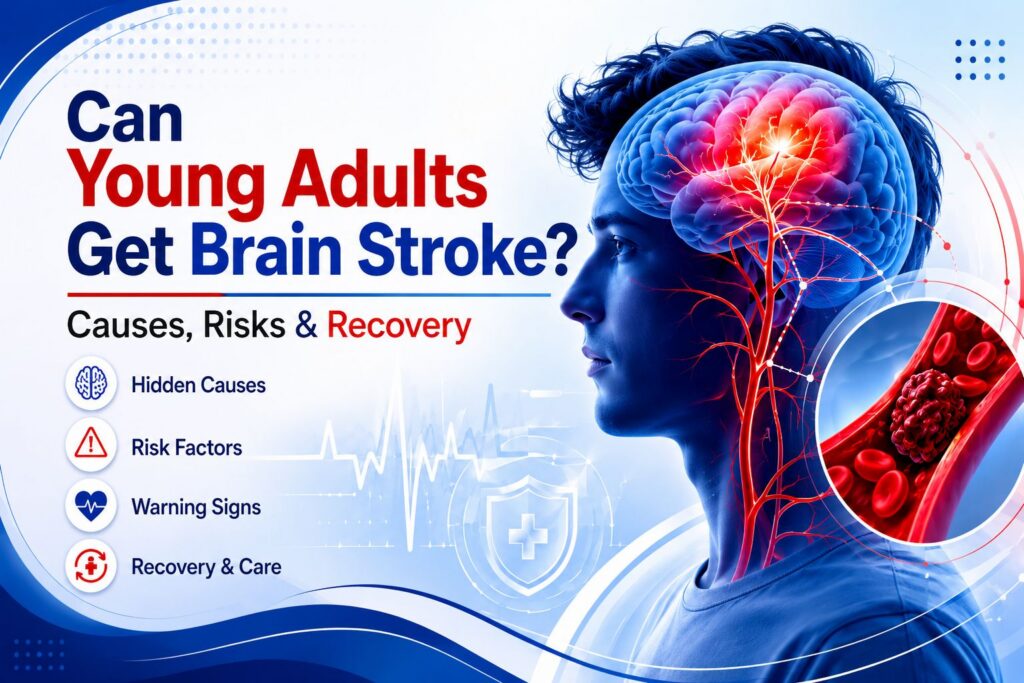
When most people hear the word “stroke,” they think of older adults. That’s why many younger people ignore symptoms such as sudden weakness, difficulty speaking, dizziness, or severe headaches, assuming they are caused by stress, lack of sleep, or fatigue.
The reality is that a brain stroke can occur at any age.
In recent years, specialists have observed a growing number of stroke cases among adults under 50. While stroke remains more common in older individuals, younger adults are not immune. Understanding the risk factors and recognising potential warning signs can help ensure timely treatment and better outcomes.
Why Is Stroke Increasing in Younger Adults?
Several factors are contributing to the rise of stroke in younger age groups.
Modern lifestyles often involve long working hours, increased stress, irregular sleep schedules, lack of physical activity, unhealthy eating habits, smoking, and excessive alcohol consumption. Over time, these factors can increase the risk of conditions such as high blood pressure, diabetes, obesity, and high cholesterol—all of which are associated with stroke.
However, lifestyle factors do not explain every case.
Many younger patients who experience stroke have underlying vascular abnormalities or medical conditions that may remain undiagnosed for years.
Hidden Conditions That Can Increase Stroke Risk
One important difference between stroke in younger adults and stroke in older adults is the underlying cause.
Brain Arteriovenous Malformations (AVMs)
A brain AVM is an abnormal connection between arteries and veins in the brain. These blood vessels can weaken over time, increasing the risk of bleeding or other neurological complications.
Many individuals with an AVM do not experience symptoms until adulthood.
Brain Aneurysms
A brain aneurysm occurs when a weakened area of a blood vessel wall bulges outward. If the aneurysm ruptures, it can lead to bleeding in the brain and become a medical emergency.
While aneurysms are often associated with older age, they can also occur in younger adults.
Dural Arteriovenous Fistulas
These abnormal connections between arteries and veins near the brain’s covering can disrupt normal blood flow and cause neurological symptoms.
Blood Clotting Disorders
Certain inherited or acquired blood-clotting conditions may increase the risk of stroke in younger individuals, even when traditional risk factors are absent.
Why Stroke Symptoms Are Often Missed in Young Adults
One of the biggest challenges with stroke in younger people is delayed diagnosis.
Many individuals do not believe they could be having a stroke because they are young and otherwise healthy. As a result, symptoms may be ignored or attributed to stress, migraine headaches, exhaustion, anxiety, or dehydration.
This delay can be dangerous because some stroke treatments are most effective when performed as quickly as possible.
Understanding common stroke warning signs and seeking immediate medical attention when symptoms occur can significantly improve outcomes.
When a Headache Could Be More Than Just a Headache
Most headaches are harmless and resolve without serious consequences. However, some headaches may be linked to underlying neurological conditions.
A sudden severe headache, a headache accompanied by vision changes, weakness, speech difficulties, or balance problems should never be ignored.
In some cases, these symptoms may be associated with:
Early evaluation can help identify these conditions before complications occur.
The Importance of Early Evaluation
Many stroke-related conditions can be identified before they result in a major neurological event.
Individuals who experience unexplained neurological symptoms, recurring severe headaches, temporary weakness, vision changes, or episodes of difficulty speaking should consider specialist evaluation.
A comprehensive assessment at a specialized stroke centre may help identify underlying vascular abnormalities and determine whether further testing is required.
How Modern Stroke Treatment Has Improved Outcomes
Advances in neurointerventional techniques have transformed the way stroke and cerebrovascular disorders are treated.
Today, many conditions that once required major surgery can be managed through minimally invasive procedures.
Depending on the underlying cause, treatment options may include:
- Mechanical thrombectomy
- Embolisation procedures
- Brain aneurysm coiling
- Flow diversion procedures
- Arterial stenting
Advanced imaging techniques also play an important role in diagnosis and treatment planning.
Can Stroke Be Prevented?
Although not every stroke can be prevented, several steps may help reduce risk:
- Monitor blood pressure regularly
- Maintain a healthy weight
- Stay physically active
- Avoid smoking and tobacco products
- Limit alcohol consumption
- Manage diabetes and cholesterol
- Get adequate sleep
- Seek medical evaluation for unexplained neurological symptoms
Early detection of vascular conditions can also play an important role in prevention.
When Should You Consult a Stroke Specialist?
You should consider a medical evaluation if you experience:
- Recurrent severe headaches
- Temporary weakness or numbness
- Unexplained vision changes
- Difficulty speaking
- Balance problems
- Family history of aneurysms or vascular malformations
Prompt diagnosis can help identify potential issues before they become life-threatening.
Final Thoughts
So, can young adults get a brain stroke?
The answer is yes.
While stroke is still more common among older adults, younger individuals can also be affected. In many cases, the cause may be related to hidden vascular abnormalities, blood vessel disorders, or lifestyle-related health conditions that have gone undiagnosed.
Awareness, early evaluation, and timely treatment remain the most effective ways to reduce the risk of serious complications.
If you experience unexplained neurological symptoms or have concerns about your stroke risk, consulting an experienced stroke physician at a dedicated brain stroke centre can help ensure appropriate evaluation and care.